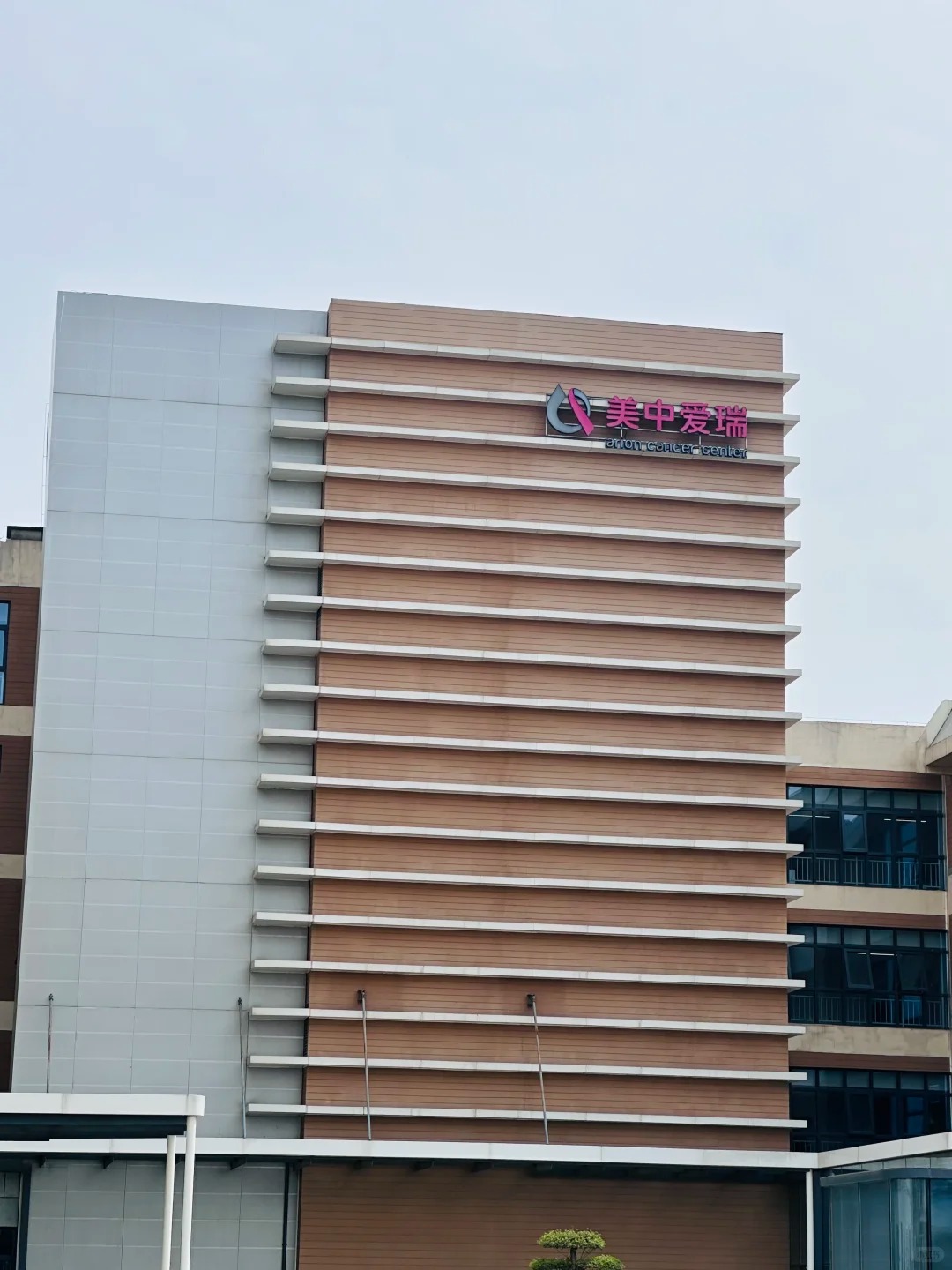
On 7 November, the 4th Arion AIFCO International Oncology Conference was held in Beijing. Under the theme Integration, Innovation, Translation — AI Empowering a New Future in Medicine, the meeting brought together specialists from international institutions including Mayo Clinic and the University of Pittsburgh Medical Center (UPMC), together with oncology experts and scholars from across China, to discuss how frontier technologies — artificial intelligence, digital medicine, cell therapy and precision oncology — can realistically be brought into clinical practice.
An Open Academic Platform Built Over Four Years
As a member of the Mayo Clinic Care Network (MCCN), Beijing Arion Cancer Hospital has long worked to open up access to high-quality medical resources worldwide and to build an academic ecosystem that is open and shared. Drawing on the international evidence-based medicine framework and clinical experience accumulated within the network, the hospital continues to translate advanced international practice into its own setting, maintaining a standing platform for international dialogue so that clinical thinking can travel in both directions, frontier techniques can be adopted, and experience can be exchanged.
Four years of sustained work have made this annual conference a durable link between oncology communities in China and abroad, and an important part of Arion's international development. This year's meeting set out to break down geographical barriers: leading specialists from China and overseas discussed clinical difficulties in depth, using academic exchange to raise clinical quality and collaborative innovation to answer the practical challenges of cancer care.
Opening: A Call to Keep Patients at the Centre
The conference was chaired by Professor Ma Zhiqiang, Medical Director of Beijing Arion Cancer Hospital. Professor Ma welcomed the participants and introduced the guests in attendance:
- Academician Zhan Qimin — academician of the Chinese Academy of Engineering and molecular oncologist
- Professor Zhu Jun — Director of the Department of Internal Medicine and Director of the Lymphoma Department, Peking University Cancer Hospital
- Professor Jeremy C. Jones — consultant in haematology and oncology at Mayo Clinic (USA), specialist in gastrointestinal oncology
- Professor Yi Lin — specialist in haematology and oncology at Mayo Clinic (USA)
- Dr. Hu Lan — founder and CEO of Meizhong Yihe Medical Group
- Professor Xu Zhonghuang — President of Beijing Arion Cancer Hospital
- Professor Sun Min — Chief Medical Officer of Beijing Arion Cancer Hospital and specialist at UPMC Hillman Cancer Center (USA)
- Professor Bai Li — Chair of the Academic Committee, Beijing Arion Cancer Hospital
- Professor Li Jinfeng and Professor Song Guohong — Peking University Cancer Hospital
- Professor Wu Ming, Professor Li Li, Professor Xie Yi and Professor Ma Wenbin — Peking Union Medical College Hospital, Chinese Academy of Medical Sciences
- Professor Duan Wei — Beijing Obstetrics and Gynecology Hospital
Professor Zhu Jun, honorary chair of this year's conference, delivered the opening address. He recalled watching Arion anchor itself to an international, specialist oncology path from the very beginning of its planning, build bridges for medical exchange through the Mayo Clinic Care Network, steadily strengthen its multidisciplinary system, and gradually establish a strong reputation in the field. In his view, oncology is now inside a window of technological change: artificial intelligence, precision testing and new immunotherapies are emerging continuously and opening new space for tackling difficult cancers.
Professor Zhu also emphasised that, with the Healthy China strategy and long-term cancer control goals in mind, clinicians should actively embrace new technologies and make good use of big-data tools — without losing sight of the fundamentals of medicine. Technology is only a means; patient benefit is the measure by which everything is judged. He expressed the hope that the conference would produce practical outcomes, translate frontier thinking into optimised clinical plans, and hold fast to a patient-centred foundation that brings more survival hope to people living with cancer.
Frontier Technologies and Precision Medicine
After the opening addresses, the conference moved into its keynote session. Speakers from China and abroad addressed the meeting theme from several angles: guideline updates, new drug development, standardised MRD testing, multidisciplinary collaboration systems, and the practical routes by which artificial intelligence enters cancer screening and clinical decision-making.
Academician Zhan Qimin opened the keynote session with Frontier Technologies Empowering the Development of Precision Medicine. Drawing on Chinese cancer incidence and survival data, he analysed the real challenges facing cancer prevention and treatment in China and argued that precision medicine is the inevitable direction of development. The profound heterogeneity of cancer determines a logic of individualised treatment — the same disease treated differently in different patients — and technologies such as omics, molecular imaging, artificial intelligence, and cell and immune therapy provide the means to pursue that goal.
Academician Zhan proposed that convergence between medicine and engineering, and between medicine and the basic sciences, is the key to medical breakthroughs: big data and artificial intelligence can help identify targets, assist pathological interpretation, shorten drug development cycles, and widen the boundaries of precision cancer prevention and control.
AI in Oncology: From Vision to Clinical Practice
Professor Jeremy C. Jones presented Artificial Intelligence in Oncology: From Vision to Clinical Practice. Building on eight years of experience deploying AI in clinical settings at Mayo Clinic, he described in-hospital applications of machine learning, large language models and digital pathology. Supported by large, long-accumulated patient databases, AI tools can automatically review medical records, summarise clinical evidence, assist tumour staging interpretation and complete intelligent registration in outpatient clinics — and are also being applied in digital pathology, electrocardiogram screening and the drafting of research ethics protocols.
In his view, AI will not replace physicians, but physicians who use AI well will reshape the way clinical work is done. He stressed at the same time that AI is an adjunct: clinical decisions must remain under the control of the physician. The point is to save clinicians time on documentation so that attention can return to the patient.
Cell Therapy at Mayo Clinic
Professor Yi Lin spoke on Advances in Cancer Cell Therapy at Mayo Clinic. She described Mayo Clinic's deep involvement in the development of several FDA-approved CAR-T products and its mature experience in haematological cell therapy, alongside continuing programmes in solid-tumour cell therapy, bispecific antibodies, TIL and TCR-T technologies. Her talk focused on research approaches that combine multi-omics with artificial intelligence to dissect the tumour microenvironment and optimise combination immunotherapy regimens, and on next-generation approaches such as in vivo CAR-T. She looked forward to using the conference as an opportunity to work with Chinese colleagues on the technical bottlenecks of cell therapy for solid tumours.
Progress — Has It Purified Us?
Professor Sun Min gave a talk titled Progress — Has It Purified Us? From an Essay Question Set in 1750 to the Oncology Clinic in the AI Era. Drawing on his own clinical experience, he weighed the opportunities and the potential risks that artificial intelligence brings: AI can markedly improve the efficiency of care, but it also carries hazards such as hallucinated results and the weakening of a physician's own clinical judgement. In his view AI is a powerful adjunct, while the authority to make clinical decisions must always rest with the clinician — keeping the human in the loop, the craft in hand, and the patient first — so that independent judgement and service to patients are preserved even as technology changes.
Rare Disease: An Integrated Model for Neurofibromatosis
Professor Xu Zhonghuang focused on rare diseases such as neurofibromatosis, setting out the current state of diagnosis and treatment and the direction ahead. Neurofibromatosis is a lifelong genetic condition, and patients commonly face difficulty obtaining a diagnosis, limited treatment options, heavy financial pressure and insufficient psychological support. Through a standing MDT mechanism, Arion works with charitable organisations to build an integrated model — clinical care, research funding, patient support and international exchange — opening a dedicated MDT clinic for the condition, supporting treatment and related research projects for patients nationwide, and connecting with Mayo Clinic Care Network resources for international academic exchange. The model closes the loop from clinical need to research translation and offers a reference point for whole-cycle, humanistic management of cancer and rare diseases.
Closing: Internationalisation Is Not Simply Importing Ideas
Throughout the forum, Chinese specialists shared local MDT practice, consensus development approaches and clinical research data reflecting the characteristics of cancers that are common in China, while overseas specialists brought the latest global research findings, network quality-control standards and case studies of new technology adoption. Participants exchanged views on the handling of difficult cases, risk control for new technologies and whole-cycle patient management — narrowing the information gap between Chinese and international practice and consolidating a standing channel for cross-border academic dialogue. This exchange of ideas is itself an important part of Arion's effort to move academic results into clinical care.
In his closing summary, Professor Ma Zhiqiang observed that internationalisation does not mean simply importing ideas from overseas. It means absorbing them, validating them and adapting them locally, until a high-quality care system suited to the needs of patients in China takes shape. Arion will continue to use high-level international academic meetings as a vehicle to refine its in-hospital MDT workflow, clinical assessment standards and research portfolio, and to carry the results of academic exchange straight through to the point of patient care via its standing international consultation channel.
Looking ahead, Arion will maintain an open and collaborative academic posture, extend its international cooperation network, and improve mechanisms for staff exchange, joint case review and collaborative research — refining a model of cancer care that combines international standards with human warmth, and holding to the principle that life comes first.
Following the plenary session, dedicated sessions continued in gastrointestinal, breast, thoracic, hepatobiliary, urological and gynaecological precision oncology. Further highlights will be published in due course.
How to Contact Us
If you have any questions or needs, please call the Arion official hotline at 400-898-0939 or contact a case manager, and we will be glad to help.
Commercial insurance direct-billing enquiries: 010-81216699.
About Beijing Arion Cancer Hospital
Since opening in January 2021, Beijing Arion Cancer Hospital has built its care model around real-time, three-tier MDT (multidisciplinary treatment). On 1 June 2022 it was formally designated a Beijing municipal medical insurance hospital, delivering precise, effective, safe, standardised and rational care to a large number of cancer patients and their families, and earning recognition within patient communities and among professional peers.
Medical Disclaimer
This article reports on an academic conference and is provided for general medical education only. It does not constitute medical advice, diagnosis, or treatment recommendations, and it is not a substitute for consultation with a qualified physician. Technologies and approaches discussed at the conference may not yet be available at every institution, and their suitability for any individual patient must be assessed by the treating team.