
Case Introduction
This is a case of a young woman with HR-positive, HER2-low advanced breast cancer who experienced rapid progression on first-line CDK4/6 inhibitor (ribociclib) combined with endocrine therapy. At the point of disease progression, she presented as a medical emergency with acute liver failure, severe hypoxemia, and coagulopathy — a classic visceral crisis. What made this case extraordinary was that conventional imaging could not fully explain the severity of her organ dysfunction. Through rigorous pathophysiological reasoning across multiple disciplines, Arion's MDT team identified an extremely rare pattern of diffuse intrasinusoidal hepatic metastasis causing hepatopulmonary syndrome, and initiated trastuzumab deruxtecan (T-DXd) rescue therapy that produced a dramatic clinical reversal.
I. Patient Profile: Baseline Status and Core Challenges
Patient Demographics
Patient: Female, 46 years old.
Family history: No known hereditary cancer predisposition.
Oncologic History Timeline
| Timepoint | Event | Details |
|---|---|---|
| Apr 2017 | Right breast cancer — primary diagnosis | Invasive ductal carcinoma, G3, max 2.0 cm; pT1N1M0 (3/9 nodes); Stage IIA, Luminal B Adjuvant AC-T chemotherapy ×8 cycles Patient refused radiotherapy and endocrine therapy |
| Jan 2021 | Left breast cancer — second primary | Breast-conserving surgery + ALND Pathology: IDC, G2, 3.0 cm; ALN 1/20 IHC: ER (strong+, 80%), PR (strong+, 90%), HER2 (1+), Ki-67 (~20%) pT2N1aM0, Stage IIB, Luminal B Adjuvant TC ×4 cycles → RT → Tamoxifen (2 years, then self-discontinued) |
| Jan 2023 | Suspicious left breast nodule | BI-RADS 4b on imaging; no biopsy or intervention performed |
| Jan 2024 | Metastatic disease diagnosis | Bilateral breast ulceration + chest tightness CT: widespread mets to liver, lung, pleura, bone, lymph nodes Pleural effusion cytology: adenocarcinoma cells IHC: ER (moderate-strong+, 85%), PR (moderate+, 1%), HER2 (2+), Ki-67 (15%); FISH negative Diagnosis: Metastatic breast cancer, Stage IV, Luminal B, HER2-low |
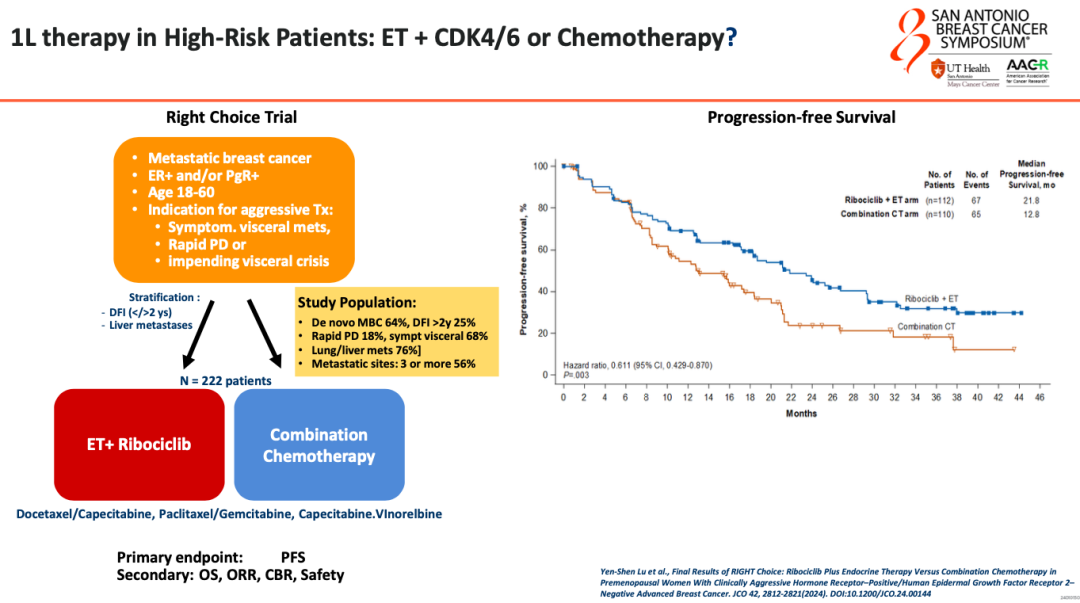
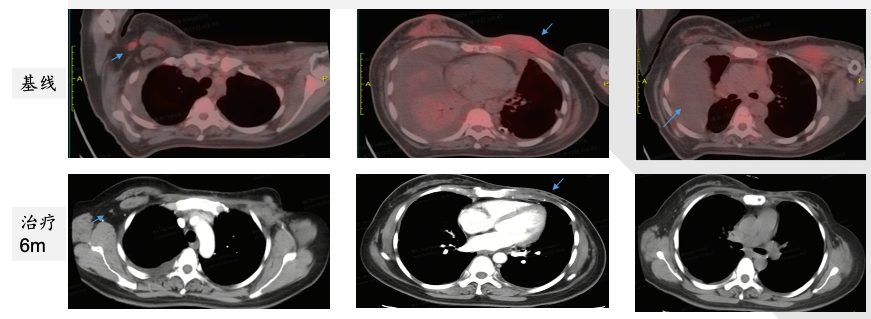
| Jan 2024 – Jun 2025 | First-line therapy | OFS + Anastrozole + Ribociclib (CDK4/6i) Based on RIGHT Choice trial evidence Achieved PR at 6 months; PFS: 13 months |
| Jun 2025 | Emergency admission — Visceral Crisis | Progressive dyspnea + right upper quadrant pain ×3 days Resting SpO2 81% (improves to 98% on 2 L/min NC) ALT 124 U/L, AST 320 U/L, PT% 65% Chest wall & liver mets progressing; new portal vein branch stenosis |
The Core Clinical Paradox
Upon admission, two fundamental contradictions emerged that defied simple explanation:
- Paradox 1: The degree of liver injury and hypoxemia was disproportionately severe compared to what visible imaging findings could account for, suggesting an occult pathological mechanism beyond ordinary tumor burden.
- Paradox 2: In the setting of CDK4/6 inhibitor resistance with imminent visceral crisis, how to select a rescue therapy that acts rapidly enough to reverse organ failure before it becomes irreversible.
II. MDT Decision-Making: Pathophysiological Investigation
An emergency Level-2 MDT consultation was convened on June 30, 2025, assembling oncology, ICU, hepatobiliary surgery, radiology, ultrasonography, and pathology. The discussion proceeded in two phases:
Phase One: Uncovering the Cause of Hypoxemia and Liver Injury
Hypoxemia Analysis
The team systematically excluded common cardiopulmonary causes:
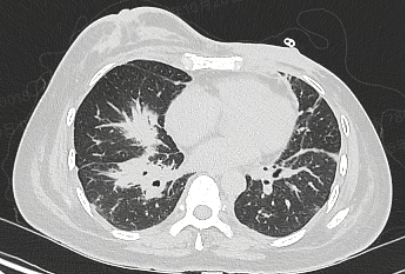
- Contrast-enhanced chest CT showed only focal right lower lobe inflammation — insufficient to explain severe diffusion impairment.
- Lower extremity venous Doppler and echocardiogram ruled out pulmonary embolism and significant cardiac dysfunction.
- No pericardial effusion or heart failure.
ICU's critical insight: The patient's hypoxemia was characteristically correctable with supplemental oxygen. This pattern distinguishes ventilation-perfusion (V/Q) mismatch or diffusion-perfusion impairment from true shunt (e.g., consolidation, atelectasis), where even high-flow oxygen provides limited benefit. This pointed toward a mechanism involving abnormal pulmonary vasculature rather than alveolar filling disease.
The Hepatopulmonary Syndrome Hypothesis
Hepatobiliary surgeons proposed that in the context of diffuse liver disease, unexplained hypoxemia after excluding primary cardiopulmonary causes should raise strong suspicion for hepatopulmonary syndrome (HPS). The core mechanism: liver failure or portal hypertension triggers intrapulmonary vascular dilatation (intrapulmonary shunting), causing blood to pass through alveoli without adequate oxygenation.
Liver Injury Deep Dive
- Viral hepatitis (A, B, C, E): excluded.
- Autoimmune hepatitis: excluded.
- Drug-induced liver injury: excluded.
- Vasculitis: excluded.
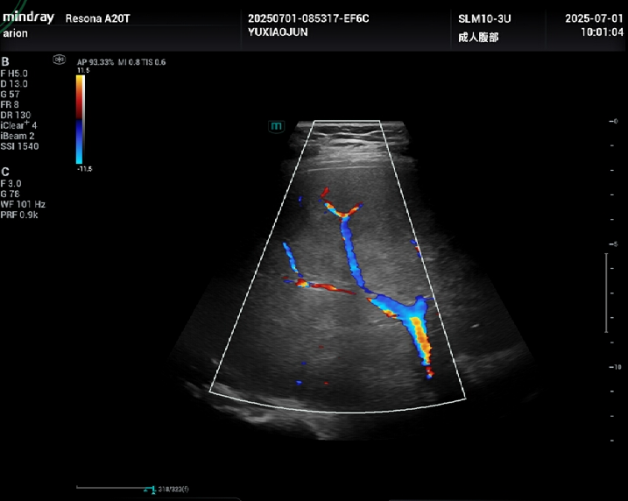
Radiology's pivotal finding: Beyond visible liver metastases, contrast-enhanced abdominal CT and ultrasound revealed critical detail — severe stenosis or occlusion of the right portal vein branch with reversed (hepatofugal) blood flow.
Diagnosing the Invisible: Diffuse Intrasinusoidal Hepatic Metastasis
The collision of imaging and clinical data led the team to a rare but well-described entity: diffuse intrasinusoidal hepatic metastasis from breast cancer. First detailed by Allison et al. in 2004, this is a metastatic pattern that is often radiographically occult — visible only at autopsy — where tumor cells infiltrate liver sinusoids as single cells or cords, raising sinusoidal pressure, obstructing portal microcirculation, and causing acute ischemic liver failure.
The complete mechanistic chain:
Tumor cell diffuse sinusoidal infiltration → Portal vein branch compression/thrombosis → Hepatofugal (reversed) portal flow → Massive hepatic ischemia → Acute ischemic liver injury → Hepatopulmonary syndrome → Severe hypoxemia
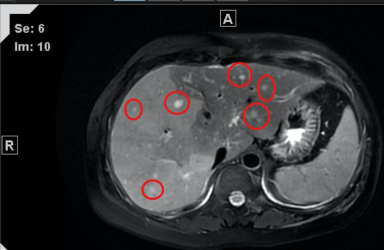
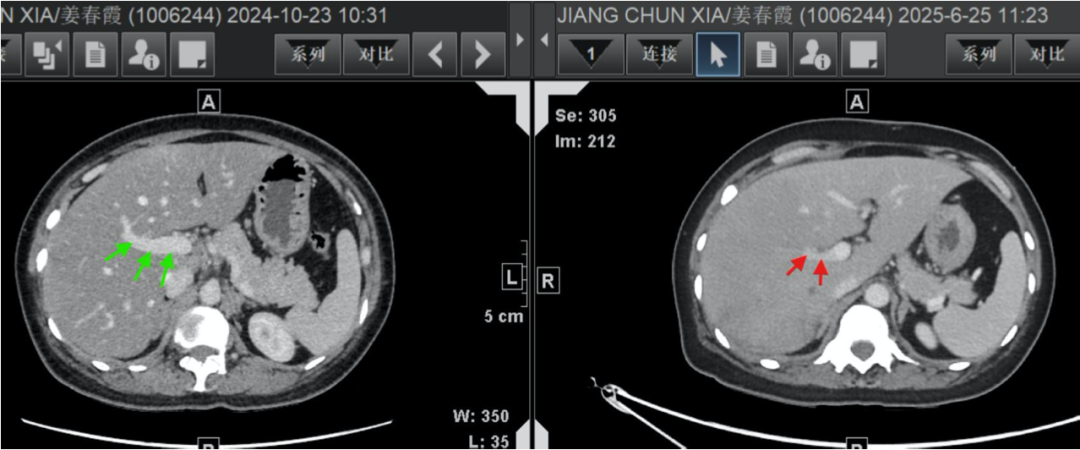
Definitive confirmation: Ultrasound-guided core needle biopsy of the diffuse hepatic lesion was performed. Pathology reported destruction of hepatic cord architecture with diffusely infiltrating adenocarcinoma consistent with breast cancer origin — confirming the diagnosis of diffuse intrasinusoidal metastasis.
Phase Two: Selecting the Optimal Rescue Therapy Under Visceral Crisis
| Option | Rationale | Assessment |
|---|---|---|
| A: Cross-line endocrine therapy | postMONARCH trial: abemaciclib + fulvestrant post-CDK4/6i | Median PFS ~6 months; too slow for visceral crisis |
| B: Conventional chemotherapy | Capecitabine, vinorelbine, etc. | Limited ORR, slow onset; unlikely to reverse acute organ failure |
| C: NGS-guided targeted therapy | Identify PIK3CA/AKT1/PTEN or ESR1 mutations; AKT inhibitor + ET | Turnaround time too long; affordability concerns; patient had prior self-discontinuation history |
| D: T-DXd (Trastuzumab Deruxtecan) ✓ | HER2-low (IHC 2+/FISH−); DESTINY-Breast04/06 evidence; high ORR; rapid onset; bystander effect | Selected — best match for urgency + biology |
Why T-DXd Was the Decisive Choice
- High-level evidence: DESTINY-Breast04 demonstrated significant OS and PFS benefit of T-DXd vs. physician's choice chemotherapy in previously treated HER2-low ABC. DESTINY-Breast06 extended benefit to endocrine-resistant, chemo-naive patients.
- Rapid onset, high ORR: T-DXd's topoisomerase I inhibitor payload (DXd) is membrane-permeable, producing a potent bystander killing effect. ORR significantly exceeds traditional chemotherapy — essential when every hour counts.
- Chain-breaking potential: Tumor regression → relief of sinusoidal/portal compression → restoration of forward portal flow → interruption of the "liver ischemia → liver failure → HPS" fatal cascade.
Risk mitigation plan: Close monitoring for interstitial lung disease (ILD) — especially concerning given baseline lung pathology. Regular echocardiography, CBC, LFT monitoring. Prophylactic anti-emetic protocol.
III. Treatment Course: From Crisis to Remission
Therapy Initiation
T-DXd 5.4 mg/kg IV on Day 1, repeated every 3 weeks (q3w).
Dramatic Hemodynamic Reversal — 2 Weeks Post-Treatment
Within just 2 weeks of the first T-DXd dose:
- Subjective: dyspnea and right upper quadrant pain markedly improved; mental state restored.
- Portal vein Doppler ultrasound: The previously reversed (hepatofugal) flow in the right portal vein branch had completely normalized to forward (hepatopetal) direction.
This finding validated the entire pathophysiological chain: reducing tumor burden in the sinusoids relieved the mechanical obstruction, allowing portal hemodynamics to normalize before any significant change in visible tumor size on anatomical imaging.
Significant Radiographic Response — 3 Cycles Post-Treatment
Comprehensive restaging after 3 cycles of T-DXd:
- Liver MRI: Previously numerous hyperintense lesions on T2/DWI sequences — most significantly reduced or no longer discernible. Large wedge-shaped infarct area in right lobe markedly contracted.
- Chest wall soft tissue mass: Substantial regression.
- Overall response: Partial Response (PR).
IV. Key Clinical Takeaways
1. Beware the "Invisible" Metastasis Pattern
Oncologists must maintain heightened awareness of diffuse intrasinusoidal hepatic metastasis as a rare but devastating metastatic pattern in breast cancer. When a patient with advanced breast cancer develops unexplained acute liver failure without typical space-occupying lesions on imaging, this entity should be actively considered. Mechanistically, loss of E-cadherin and other cell-adhesion molecules may enable this disseminated growth pattern. Liver biopsy may be the only definitive diagnostic tool.
2. In Visceral Crisis, Prioritize Short-Term Response Rate (ORR) Over Long-Term PFS
Historically, visceral crisis carried a grim prognosis because conventional chemotherapy offered limited response rates. The new generation of antibody-drug conjugates, particularly T-DXd, has fundamentally changed this equation with ORRs far exceeding traditional chemotherapy. When managing visceral crisis, the primary decision criterion should be which available agent delivers the fastest and deepest tumor shrinkage — not which offers the longest median PFS in a stable outpatient population.
3. Mechanism-Oriented MDT Is the Deciding Factor
This case succeeded because each discipline contributed an irreplaceable link to the causal chain:
- ICU: Identified the oxygen-correctable nature of hypoxemia → pointed to V/Q mismatch rather than shunt.
- Hepatobiliary surgery: Proposed HPS hypothesis linking liver disease to respiratory failure.
- Ultrasound: Captured the decisive finding of reversed portal vein flow.
- Radiology: Recognized the pattern as consistent with sinusoidal infiltration (not just nodular mets).
- Oncology: Selected T-DXd based on HER2-low biology and urgent need for rapid response.
- Pathology: Provided definitive tissue confirmation of the rare diagnosis.
High-level MDT is not a collection of independent opinions — it is the collaborative construction of a complete logic chain from clinical presentation to pathophysiological mechanism to therapeutic intervention.
Expert Commentary
Prof. Sun Min
University of Pittsburgh Medical Center (UPMC), USA
This case represents an extraordinarily valuable teaching example that perfectly illustrates how precise pathophysiological reasoning, efficient MDT collaboration, and evidence-based drug selection can synergistically reverse visceral crisis in a critically ill oncology patient.
Diagnostic Dimension: Reverse Reasoning for a Rare Metastasis Pattern
The breakthrough lay in keenly recognizing the "vast discrepancy between imaging findings and clinical severity." Rather than attributing the presentation to end-stage disease, the team started from the key clue of "right portal vein reversed flow" and completed the full pathophysiological reverse-reasoning chain: sinusoidal diffuse infiltration → portal flow obstruction → ischemic liver injury. Liver biopsy finally confirmed the radiographically invisible diffuse intrasinusoidal metastasis. This reaffirms that in special metastatic patterns, invasive biopsy remains the only gold standard for ante-mortem diagnosis.
Cognitive Dimension: Precision Association of Hepatopulmonary Syndrome
Linking the patient's acute hypoxemia to her underlying liver disease demonstrates exceptional clinical thinking. The ICU team precisely captured the signature feature of "oxygen-correctable hypoxemia", localizing it to V/Q mismatch rather than true shunt, thereby associating it with the rare entity of acute malignancy-related hepatopulmonary syndrome (HPS). This rapid cross-disciplinary pathophysiological association in an acute context reflects superior knowledge integration capability.
Therapeutic Dimension: Forward-Looking T-DXd Selection Under Visceral Crisis
In the setting of rapid CDK4/6 inhibitor resistance with visceral crisis, the decision to front-load T-DXd is supported by robust evidence (DESTINY-Breast04/06). Under the perilous circumstances of visceral crisis, the core therapeutic contradiction is racing against time; thus, greater attention must be paid to short-term high response rate (ORR) for rapid crisis resolution rather than focusing solely on long-term progression-free survival (PFS).
Forward-Looking Dimension: Resistance Mechanisms & Payload Diversification Strategy
For post-T-DXd planning, three points merit attention:
- Safety monitoring: Given poor baseline lung function, vigilant ILD surveillance is essential.
- Avoid blind sequencing: ESMO Breast 2026 SATEEN study and real-world data indicate that direct sequencing to another TOP1-inhibitor payload ADC (such as SG) after T-DXd progression yields very low response rates due to TOP1 mutation-driven cross-resistance.
- Diversified backend strategy: Upon progression, prioritize NGS-guided targeted therapy or switch to agents with different payload classes (e.g., microtubule inhibitors such as eribulin or novel ADCs) — a payload diversification strategy.
Cognitive Science Perspective: Clinical Intuition as High-Dimensional Feature Matching
"The decision had already been made; all the logic that followed was merely searching for evidence to validate it."
This was my personal case. My first intuitive judgment was "breast cancer with diffuse liver metastasis." In cognitive psychology terms, this exemplifies Daniel Kahneman's dual-process theory: System-1 pattern recognition triggered instant intuition, followed by System-2 logical analysis seeking confirmatory evidence. This "clinical intuition" is not blind faith — it represents rapid retrieval of "illness scripts" built from fragmented information integrated with long-term knowledge accumulation. The Arion MDT platform enabled practical implementation of the Recognition-Primed Decision (RPD) model, completing the full intuition-validation-execution loop within minutes. The success of this case lies not only in transforming years of accumulated knowledge into momentary breakthrough intuition, but also in the support of evidence-based medicine and the MDT platform that enabled it.
Prof. Bai Li
Department of Oncology, PLA General Hospital (301 Hospital), Beijing
This is an HR+/HER2-low advanced breast cancer case of immense teaching value and clinical warning significance. It reveals the pathophysiological mechanism by which a rare metastasis pattern (diffuse intrasinusoidal metastasis) precipitates visceral crisis, and the decisive role of precision targeted therapy (T-DXd) in reversing the crisis at a critical juncture.
From Apparent Contradiction to Unified Mechanism
The diagnostic challenge lay in the enormous inconsistency between clinical severity and imaging appearance. The MDT team's success stemmed from breaking free of the "end-stage tumor" cognitive trap through rigorous pathophysiological reasoning, precisely identifying two overlapping and rare syndromes:
- Hepatopulmonary Syndrome (HPS) diagnostic breakthrough: The key determination — severe hypoxemia yet "correctable with oxygen," without cardiopulmonary baseline disease. The team astutely recognized this as V/Q mismatch特征, not simple consolidation or heart failure. Connecting mechanism to management successfully linked hypoxemia to liver pathology, proposing HPS. This was a crucial step that avoided futile anti-infective or ventilatory support and pointed directly toward the hepatic etiology.
- Etiology of acute ischemic liver injury — diffuse intrasinusoidal metastasis: The MDT did not settle for the generic diagnosis of "liver metastasis." Instead, starting from the critical imaging clue of "portal vein stenosis + reversed flow," they deduced the mechanism of sinusoidal tumor cell diffuse infiltration causing microcirculatory compromise and regional ischemia — from imaging anomaly → flow reversal → sinusoidal compression hypothesis → pathological biopsy confirmation. Each link connected seamlessly.
This reminds clinicians: when liver enzymes rise acutely (especially AST markedly exceeding ALT) combined with atypical hepatic imaging signals, one should be vigilant for "sinusoidal metastasis" — a radiographically occult but clinically ominous pattern.
Clinical Management: Mechanism-Driven Decisive Action
Against the backdrop of visceral crisis (acute liver failure + severe hypoxemia), timeliness and depth of response were the central contradictions:
- Resolutely abandoning "low-efficiency or delayed" strategies: Explicitly rejecting cross-line endocrine therapy (postMONARCH: ~6-month PFS) and traditional chemotherapy (slow onset, low ORR) as incapable of reversing impending organ failure. Correct judgment — in visceral crisis, ORR outweighs PFS.
- Precise and timely T-DXd deployment: Patient was HER2-low (IHC 2+/FISH−), squarely within T-DXd's indicated population. DESTINY-Breast04/06 provided high-level evidence. Two pharmacological properties specifically addressed the crisis: (a) high ORR with rapid onset — DXd payload potency plus bystander effect achieves rapid, deep tumor shrinkage, promptly relieving physical compression on sinusoids; (b) breaking the pathological chain — the therapeutic goal extended beyond shrinking tumors to restoring forward portal flow, thereby interrupting the "liver ischemia → liver failure → HPS" lethal cycle. The 2-week hemodynamic reversal perfectly validated this mechanistic reasoning.
- Risk awareness: Maintaining vigilance for T-DXd-specific ILD risk while initiating potent therapy, with proactive monitoring plans, reflects rational risk-benefit weighing in the critical care context.
Core Lessons
This was a "mechanism-based precision rescue." Key takeaways for clinicians:
- Do not equate "rapid progression" directly with "end stage." Deep analysis of contradictions between clinical presentation and examination findings may reveal reversible special pathophysiological mechanisms.
- The essence of MDT is pathophysiological analysis. In this case, radiology, ICU, and hepatobiliary surgery jointly constructed the complete logical chain from "portal reversed flow" to "sinusoidal metastasis" to "HPS."
- Treatment decisions must match disease kinetics. Facing visceral crisis, prioritize the agent with the highest known ORR and fastest onset in that population (here, T-DXd) rather than following conventional sequential lines of therapy.
In summary: this case successfully achieved clinical reversal of a rare, occult, and highly lethal tumor emergency (diffuse sinusoidal metastasis → liver failure + HPS) through precise mechanistic diagnosis and efficient ADC pharmacotherapy. It provides a textbook-level practice template for managing similarly "clinical-severity-exceeds-imaging-findings" critically ill oncology patients.
Seeking Advanced Breast Cancer Treatment in China?
Beijing Arion Cancer Hospital's Breast Tumor Center specializes in complex and refractory breast cancer cases, including HR+/HER2-low disease with unusual metastatic patterns, visceral crisis management, and novel ADC/CDK4/6 inhibitor sequencing strategies. Our multidisciplinary team integrates medical oncology, surgery, radiology, pathology, and critical care to deliver individualized treatment plans. International patient services coordinate your complete journey from remote consultation through treatment and follow-up.
Request a Consultation International Patient Guide