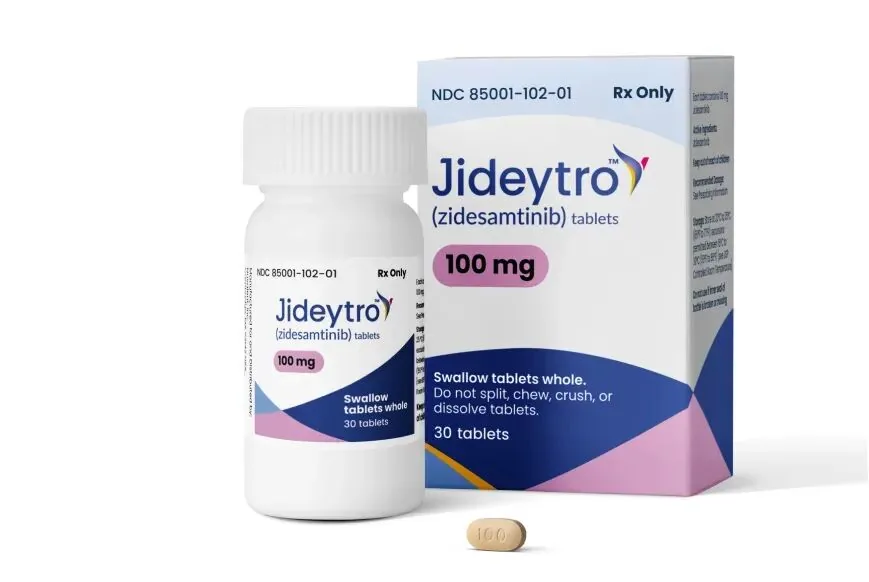
ROS1 fusions are an uncommon driver alteration in non-small cell lung cancer (NSCLC), occurring in about 1–2% of cases, and are seen particularly in younger patients and people who have never or only lightly smoked. The alteration is estimated to account for roughly 50,000 new cases worldwide each year. These tumours have a strong tendency to spread to the central nervous system: close to 40% of patients already have brain metastases at diagnosis, and the brain is the most common site of progression after treatment. Earlier-generation ROS1 inhibitors remain limited by acquired resistance, insufficient intracranial control and tolerability problems.
New clinical data for zidesamtinib (Jideytro), a next-generation highly selective ROS1 tyrosine kinase inhibitor, have added a further option for this group. At Beijing Arion Cancer Hospital, an Innovative Drug Consultation Clinic has also been opened to help patients interpret such data, understand whether an overseas-approved medicine is relevant to their own molecular profile, and plan the conversation with their treating oncologist.
What Is ROS1 and Why Is It Tested?
ROS1 is a proto-oncogene. As the US National Cancer Institute explains, a ROS1 fusion arises when part of the gene breaks and joins to another gene; the resulting ROS1 protein is overactive in lung cancer cells, driving uncontrolled cell growth and tumour formation.
Testing is now standard rather than optional. ROS1 is listed as a mandatory driver gene in Chinese and international guidelines for advanced NSCLC: the Chinese Medical Association's clinical practice guideline for lung cancer includes it among the genes that must be tested, the CSCO 2025 guideline for NSCLC gives it a Level I recommendation (category 1A evidence) for all advanced cases and for resectable stage IB–IIIA disease, and the US NCCN guideline treats ROS1 rearrangement as an independent predictive biomarker and recommends testing all patients with advanced or metastatic disease.
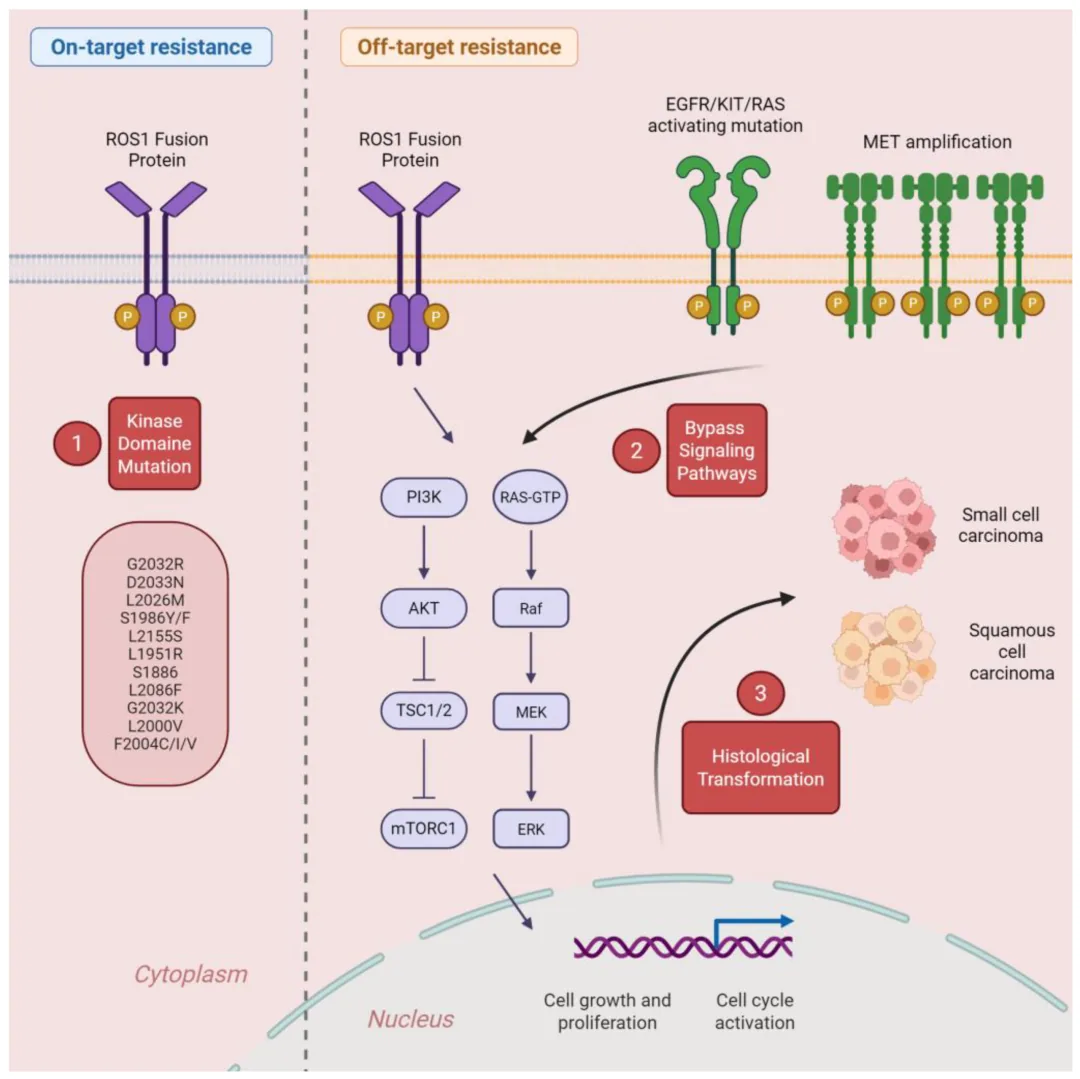
For Patients Who Have Progressed on an Earlier ROS1 Inhibitor
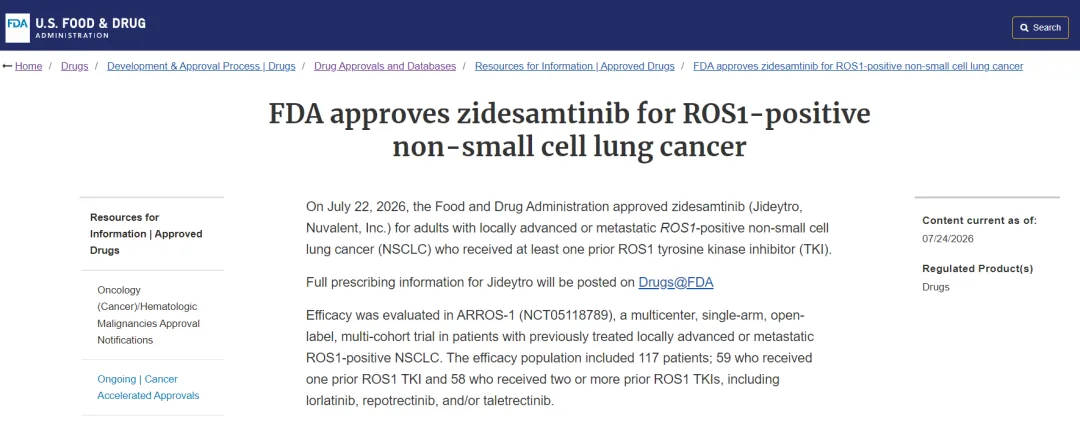
Zidesamtinib was approved by the US Food and Drug Administration in July 2026 for adults with locally advanced or metastatic ROS1-positive NSCLC whose disease has progressed after at least one prior ROS1 TKI. In previously treated patients, the reported objective response rate (ORR) was 44%, with 69% of responses lasting more than 12 months. Against the G2032R resistance mutation — one of the hardest clinical scenarios — the ORR reached 54%, addressing a gap left by earlier ROS1 inhibitors. Among patients with measurable brain metastases at baseline, the intracranial ORR was 48% and 22% achieved complete disappearance of intracranial lesions.
For Previously Untreated Patients: The ARROS-1 Results
Data from the global registrational phase I/II ARROS-1 study, presented at the 2026 World Conference on Lung Cancer, support exploration of a first-line indication. The study enrolled patients with advanced ROS1-positive lung cancer who had not received a ROS1 TKI and had had no more than one prior line of chemotherapy or immunotherapy.
In the 94-patient efficacy population, with a median follow-up of 15.2 months, the ORR was 94% and 15% of patients achieved a complete response. Responses were durable: 94% maintained response at 9 months and 86% at 12 months, and the 12-month progression-free survival rate was 90%. Median duration of response and median progression-free survival had not been reached. Among the 10 patients with measurable brain metastases at baseline, the intracranial response rate was 100% and 70% achieved complete clearance of brain lesions; no central nervous system progression events were observed in patients without baseline brain metastases.
Safety Profile and Points Requiring Caution
Overall tolerability was reported as manageable, with a low rate of treatment discontinuation. Treatment-related adverse events occurring in at least 15% of patients were peripheral oedema, weight gain, elevated creatine phosphokinase, taste disturbance and elevated aspartate aminotransferase, mostly low grade. Dose reduction due to adverse events was required in 11% of patients and 1% discontinued treatment. Clinicians should remain alert to QT interval prolongation, elevated creatine phosphokinase, pancreatitis and fracture risk; grapefruit and grapefruit products are to be avoided during treatment.
An important access caveat: at the time of writing, zidesamtinib is approved only in the United States, and no import application has been submitted in China. Availability depends on official regulatory announcements and should always be verified rather than assumed.

The Innovative Drug Consultation Clinic at Arion
Response rates describe groups of patients in a study, not an individual's outlook. Genomic profile, previous treatment and general condition differ from person to person, and a new agent is not automatically appropriate for everyone. Arion's Innovative Drug Consultation Clinic brings together a multidisciplinary oncology team and international oncology network resources to provide a structured, one-stop assessment:
- In-depth interpretation of genetic test reports to identify the relevant driver and variant.
- Clear explanation of the approved indications, efficacy and safety information for medicines licensed overseas.
- An individual assessment of whether a frontier therapy matches the patient's own situation.
- Counselling on treatment options, medication risks and management of adverse effects.
- Multidisciplinary team consultation to develop an individualised diagnostic and treatment plan.
The clinic is intended to help patients form a realistic view of new medicines and identify a direction worth discussing with their treating physician — not to prescribe or supply unapproved drugs.
How to Contact Us
For questions about this article, about a consultation, or about arranging care in Beijing, please contact the MedTourChina international patient team by email at info@healthtourchina.net or on WhatsApp at +86 17742026990.
Medical Disclaimer
This article is provided for general information and education only. It does not constitute medical advice, diagnosis, or a treatment recommendation, and it is not a substitute for consultation with a qualified physician. Drug availability, approved indications and regulatory status differ between countries and change over time. This article does not recommend any specific medicine; always confirm current status with the relevant regulator and discuss treatment with a qualified oncologist.