This article is a de-identified educational case review. It describes the clinical course of one patient managed at Beijing Arion Cancer Hospital and reflects the team's approach to complex colorectal cancer with liver metastases. It is not medical advice, nor does it guarantee outcomes for other patients. Treatment decisions must be individualized by qualified physicians.
Case Overview: A Complex Presentation
In March 2026, a 63-year-old man presented with recurrent rectal bleeding. Imaging revealed advanced sigmoid colon cancer with multiple liver metastases. The diagnosis was further complicated by hypertension, diabetes, and other chronic conditions that raised the overall risk of major surgery.
Biopsy of a liver lesion confirmed metastatic adenocarcinoma of colorectal origin. Endoscopy then localized the primary tumor in the sigmoid colon approximately 30 cm from the anal verge: a circumferential, ulcerated mass causing near-total luminal narrowing. At that point, the picture was clear — synchronous sigmoid colon cancer with multifocal liver metastases.
Step 1: Conversion Therapy to Control the Disease
Because the liver disease was extensive, upfront surgery carrying both the primary tumor and all liver metastases in one setting was considered high risk. The patient first received systemic conversion therapy at another center, combining targeted therapy with chemotherapy to control systemic disease and shrink the liver lesions.
By July 2026, imaging and clinical assessment indicated the liver metastases had responded sufficiently to consider a staged surgical plan. The patient underwent open liver metastasectomy combined with intraoperative radiofrequency ablation. Pathology of the resected liver specimens showed:
- All lesions were confirmed metastatic deposits from colorectal adenocarcinoma.
- Tumor regression after conversion therapy was evident, with residual tumor estimated at 20–30%.
- No vascular invasion, perineural invasion, or capsular breakthrough was observed.
- Molecular and immunohistochemical studies provided data to guide later systemic decisions.
Step 2: A Liver-First Strategy
After the liver metastases were controlled, the next priority was the primary sigmoid tumor, which was causing symptoms of partial bowel obstruction. The patient was transferred to Beijing Arion Cancer Hospital for definitive resection of the primary lesion.
The team adopted a liver-first (metastasis-first) approach, a recognized strategy in selected patients with synchronous colorectal liver metastases. Treating the metastatic disease first can reduce overall tumor burden and lower the risk of simultaneous major hepatic and colonic resections, especially in patients with significant comorbidities.
Step 3: MDT-Guided Laparoscopic Primary Resection
At Arion, an multidisciplinary team (MDT) was convened, including gastrointestinal surgery, medical oncology, imaging, pathology, anesthesia, and critical care. The patient's fitness for surgery was reassessed after a two-week optimization period. Once organ function, glucose control, blood pressure, and nutritional status were deemed acceptable, the team proceeded.
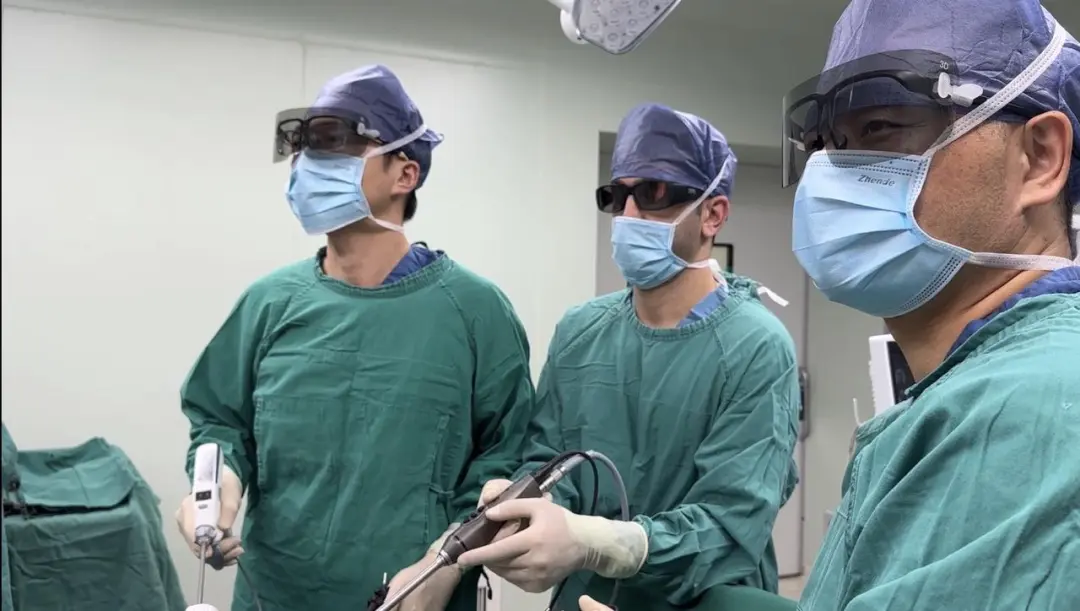
Dr. Liu Zheng and the gastrointestinal tumor center team performed a laparoscopic radical resection of the sigmoid colon. The procedure was completed successfully, and the patient was hemodynamically stable postoperatively.

Step 4: Structured Postoperative Recovery and Follow-Up
The postoperative period was managed in the intensive care unit with close monitoring of drainage, wound healing, vital signs, and metabolic parameters. Given his chronic conditions, the team focused on:
- Step-by-step diet and mobility rehabilitation.
- Strict glucose and blood pressure control.
- Infection prevention and early recognition of organ dysfunction.
- Scheduled laboratory and imaging surveillance.
After stabilization, the MDT outlined a long-term oncologic follow-up and adjuvant strategy aimed at reducing the risk of recurrence. At the time of reporting, the patient's recovery was progressing and his clinical indicators were improving.

Why This Case Matters
This case illustrates several principles increasingly emphasized in modern oncology:
- Staged treatment is sometimes safer than one-stage surgery. For selected patients with extensive liver metastases, controlling metastatic disease first can make subsequent primary resection safer.
- MDT input matters in complex cases. Surgical, medical, imaging, pathologic, and anesthetic expertise were needed at each decision point.
- Prehabilitation and comorbidity control are part of cancer surgery. Two weeks of optimization helped convert a high-risk patient into an operable candidate.
- Molecular characterization informs precision oncology. Comparing the genetic profiles of the primary tumor and metastatic deposits can help identify heterogeneous drivers and guide later therapy selection.
This case was also reviewed as part of an institutional observational program exploring whole-course tumor management under MDT and care-plan coordination. Such programs aim to document care pathways and outcomes, but individual results vary and should not be interpreted as predictive.
Key Takeaways
- Advanced sigmoid colon cancer with synchronous liver metastases can be approached with conversion therapy followed by staged surgery in selected patients.
- A liver-first strategy may reduce perioperative risk when the metastatic burden is high.
- MDT coordination and comorbidity optimization are central to safely managing complex, multi-site disease.
- Every patient's situation is unique; treatment plans must be individualized by an experienced oncology team.
Medical Disclaimer
This article is provided for general medical education and public health information only. It does not constitute medical advice, diagnosis, or treatment recommendations. Clinical outcomes depend on individual circumstances, and treatment decisions should always be made with a qualified physician.