This article is written for general medical education and public health information. It explains the science behind a class of cancer immunotherapy in plain language. It does not constitute medical advice, diagnosis, or a treatment recommendation. Treatment decisions should always be made with a qualified physician based on individual circumstances.
Why Small Cell Lung Cancer Is Hard to Treat
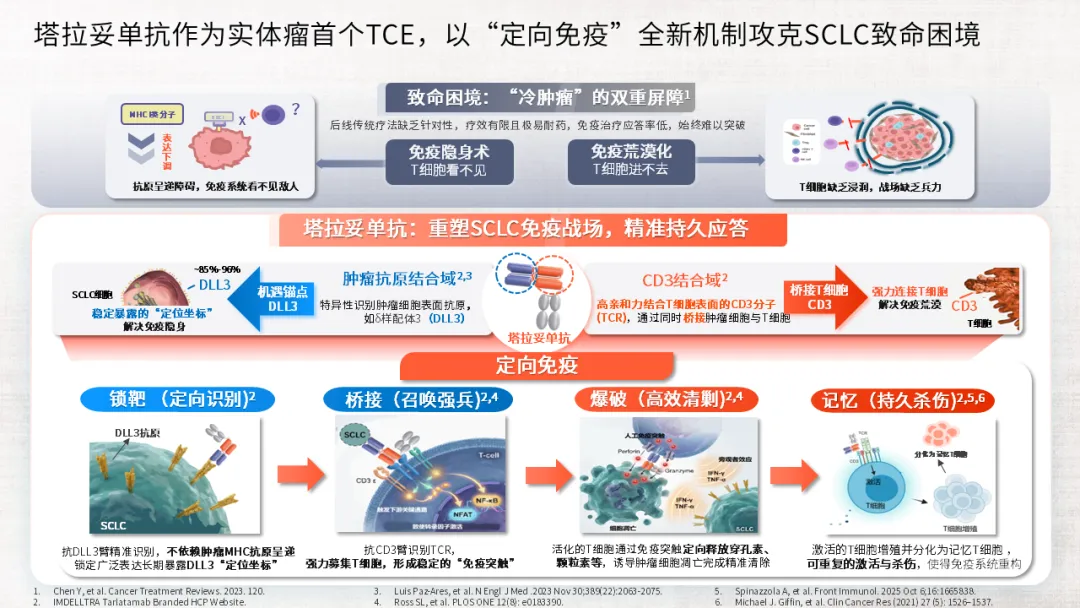
Small cell lung cancer (SCLC) is an aggressive form of lung cancer that grows quickly and tends to spread early. It is often described as a "cold tumor" — its tumor microenvironment actively suppresses the body's immune response, which limits how well conventional immunotherapy works for many patients.
Most patients receive chemotherapy and immunotherapy as first-line treatment. But once the disease progresses after those therapies, the remaining options are limited, and clinicians have long faced a shortage of effective later-line treatments. There is a clear need for drugs with fundamentally different mechanisms of action.
What Is DLL3, and Why Does It Matter?
DLL3 (Delta-like ligand 3) is a protein that sits on the surface of most small cell lung cancer cells. A key feature makes it an attractive target: normal human cells generally do not display DLL3 on their surface. That difference allows a therapy to recognize cancer cells relatively specifically while sparing most healthy tissue.
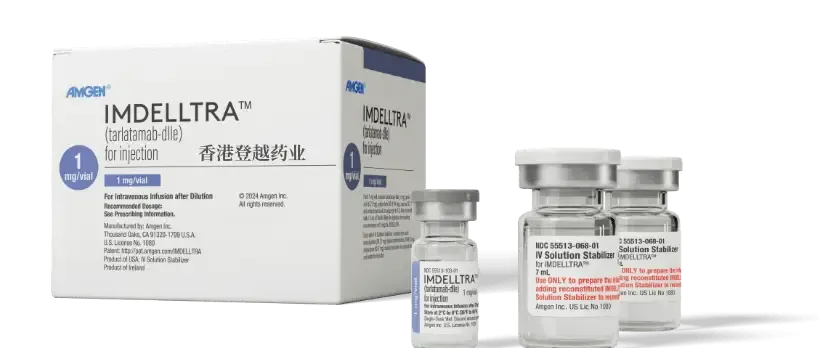
This "cancer-specific marker" is the foundation of a newer drug class known as DLL3-targeted bispecific T-cell engagers. Tarlatamab is a representative example that became available in China in 2026, approved for use in extensive-stage SCLC after at least two prior lines of systemic therapy (including platinum-based chemotherapy).
How Tarlatamab Works: A Dual-Arm Immune Bridge
Unlike traditional drugs that act directly on the tumor, tarlatamab works by redirecting the patient's own immune system. It is built like a "two-headed precision connector":
- One arm binds DLL3 on the surface of the cancer cell, anchoring the drug to the tumor.
- The other arm binds CD3, a protein on the surface of T cells — the immune system's frontline attackers.
By physically linking the T cell to the tumor cell, the drug brings immune cells into close contact with cancer cells and helps activate them. Once activated, T cells can release their killing payload directly against the tumor, and in some cases form an immune memory that helps sustain the anti-cancer effect over time. This is why the approach is sometimes described as "directed" or "targeted" immune therapy.
Who Was Studied in Clinical Trials
Clinical evidence for this drug class comes from global and China-based trials. Based on published data and clinical consensus, the populations studied include several distinct groups:
- Patients with progression after chemotherapy: Adults with extensive-stage SCLC whose disease progressed after platinum-based chemotherapy — regardless of whether they had received prior immunotherapy. Trials positioned this as a later-line option.
- Patients with stable brain metastases: Because SCLC commonly spreads to the brain, trials included patients whose brain lesions were asymptomatic or stable after local treatment. Reported data suggested the drug could help shrink brain lesions in such patients, though each case requires careful neurological assessment.
- Treatment-naive patients via clinical trials: For patients starting therapy for the first time, or those with limited-stage disease after chemoradiotherapy, access has been through clinical trials exploring earlier-line use.
Whether any specific patient is appropriate for such therapy depends on many factors — overall health, prior treatments, organ function, and disease characteristics — and must be determined by a treating oncology team.
What the Clinical Data Showed
In a pivotal phase II study at the approved dose, the objective response rate was about 40%, with some patients achieving complete tumor regression. The median progression-free survival was 4.9 months, and the duration of response reached 9.7 months in responders. A China-specific analysis suggested outcomes consistent with the global data, with a safety profile considered compatible with the local patient population.
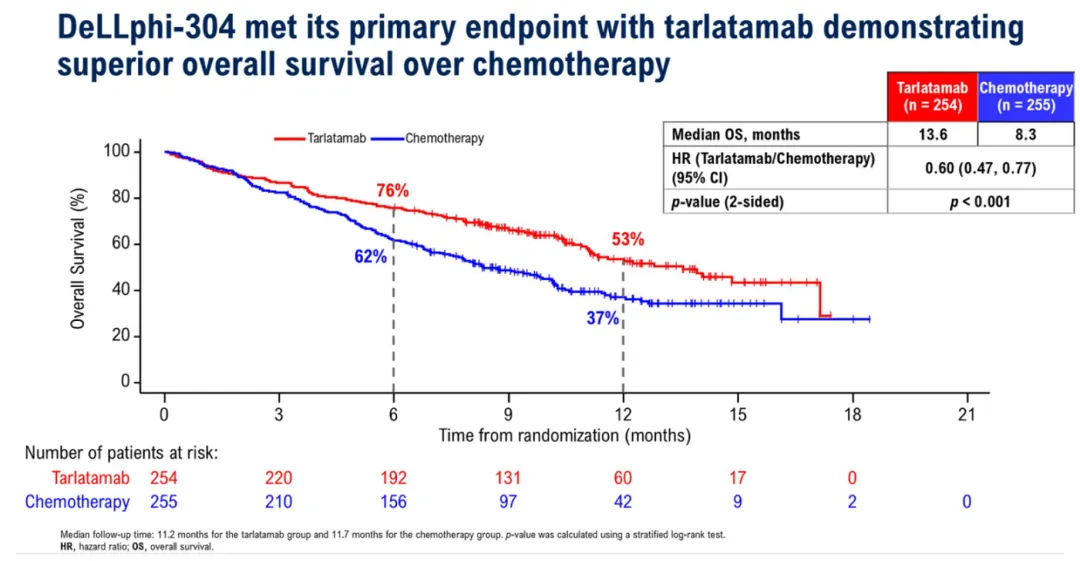
A randomized phase III study comparing the drug against standard second-line chemotherapy reported a significant improvement in overall survival and a substantial reduction in the risk of disease progression. The results were published in a leading international medical journal. These findings supported broader adoption of the drug class, and trials exploring its use in first-line maintenance and first-line induction settings have also reported encouraging results.
Is It Safe? Understanding the Side Effects
Across trials, the overall safety profile was considered manageable, with most side effects being mild and reversible. The most noteworthy events to be aware of include:
- Cytokine release syndrome (CRS): The most common reaction, though usually mild — typically fever and occasionally low blood pressure. It most often appears after the first one or two doses. Stepwise dose escalation and pre-medication can reduce the risk, and symptoms generally resolve quickly with supportive care.
- Neurological reactions: Occurred in roughly 5% of patients, usually mild confusion or difficulty finding words, recovering after intervention. Severe neurological events were rare.
- Taste changes: Reported in about 30% of patients as a mild alteration in taste, with little impact on daily life and improvement through routine dietary adjustment.
In 2026, the drug was included in a major Chinese clinical guideline for SCLC as a recommended later-line option, reflecting growing recognition by the oncology community.
Key Takeaways
- A new mechanism, not just a new drug. DLL3/CD3 bispecific engagers represent a shift from directly attacking tumors to redirecting the immune system — a conceptually different way to fight SCLC.
- Target specificity comes from biology. DLL3's near-absence on normal cells is what makes the approach selectively focus on cancer cells.
- Evidence matters. Approval and guideline inclusion rested on phase II and phase III data, including response rates, survival, and safety across global and Chinese populations.
- Safety is manageable but real. CRS and neurological effects are the main signals to monitor; both were mostly mild and reversible in trials.
- Individual suitability is essential. Eligibility, dosing, and monitoring must be decided by a qualified oncology team based on each patient's condition.
Medical Disclaimer
This article is provided for general medical education and public health information only. It does not constitute medical advice, diagnosis, or treatment recommendations. Drug names, trial data, and guidelines mentioned here may change; always refer to the latest official prescribing information and consult a licensed healthcare professional for any personal medical concern.