Case Introduction
This case documents Beijing Arion Cancer Hospital's first application of a novel T-cell immunotherapy sequencing strategy for treating a patient with relapsed or refractory diffuse large B-cell lymphoma (DLBCL). The patient had already undergone multiple standard treatment lines at external hospitals — including autologous hematopoietic stem cell transplantation and CD20-targeted CAR-T cell therapy — yet the disease continued to progress. Compounded by concurrent pancytopenia, her clinical prognosis was considered extremely poor.
Arion's multidisciplinary team (MDT) initially employed a novel CAR-T cell product (LM101) as salvage therapy. When that approach also proved ineffective due to inadequate in vivo expansion, the team rapidly pivoted to a CD20/CD3 bispecific antibody (glofitamab), ultimately achieving effective disease control with remarkably mild adverse effects.
I. Case Overview: Baseline Status and Core Challenges
Patient Profile
Patient: Female, 57 years old.
May 2024: Diagnosed with diffuse large B-cell lymphoma (DLBCL), NOS subtype, non-GCB phenotype. Clinical staging: Stage IV.
Treatment History Prior to Arion (4+ Lines of Therapy)
| Line | Treatment | Outcome |
|---|---|---|
| Line 1 | Rituximab-based immunochemotherapy (R-CHOP/R-DHAP regimen family) | No complete response achieved |
| Line 2 | Autologous hematopoietic stem cell transplantation (auto-HSCT) | Disease progression post-transplant |
| Line 2b | Zanubrutinib (BTK inhibitor) + Lenalidomide (immunomodulatory agent) | Ineffective — continued progression |
| Line 3 | CD20-targeted CAR-T cell therapy (external hospital) | Disease still progressing |
Core Challenges at Presentation
- Multi-line resistance: Having exhausted conventional immunochemotherapy, auto-HSCT, targeted agents, and one prior CAR-T therapy, the patient's prognosis was extremely poor. For primary-refractory patients after four or more lines of therapy, the expected CR rate with further chemotherapy is estimated at <10%.
- Pancytopenia: The patient developed full-lineage cytopenias (leukopenia, anemia, thrombocytopenia) secondary to prolonged myelosuppression, severely limiting options for subsequent cytotoxic chemotherapy regimens.
- Economic burden: Over one year of continuous intensive treatment had imposed significant financial strain on the household, necessitating cost-effectiveness considerations in treatment planning.
II. MDT Decision-Making: A Novel CAR-T Approach
To ensure safety and maximize efficacy potential, Beijing Arion Cancer Hospital convened a comprehensive Multidisciplinary Team (MDT):
| Department | Role & Assessment |
|---|---|
| Lymphoma Center | Patient met eligibility criteria for the LM101 CAR-T clinical trial (targeting CD19 combined with PD1/CD28). Recommended enrollment to pursue disease remission opportunity. |
| Cell Therapy Center | LM101 is a novel second-generation CAR-T construct fusing PD1 domain onto CD19-targeting CAR, enabling dual-mechanism antitumor effect. Full GMP-grade manufacturing pipeline established in collaboration with Peking University Cancer Hospital. |
| Pathology Department | Fresh biopsies of abdominal and periumbilical masses confirmed p53 protein expression positive (adverse prognostic factor), with preserved CD19 and CD20 antigen expression — providing pathological basis for target selection. |
| Imaging Center | Identified measurable lesions in periumbilical region and right hepatorenal space for baseline tumor burden assessment and response monitoring. |
| Radiation Oncology | Both identified lesions amenable to local radiotherapy as bridge therapy to reduce tumor burden during CAR-T manufacturing window. |
| Nursing / ICU / Neurology | Prepared comprehensive protocols for managing CRS, ICANS, and other CAR-T-specific complications. |
III. Treatment Course: From CAR-T Attempt to Bispecific Rescue
Step 1: Novel CAR-T Cell Therapy (LM101) Implementation
A. Peripheral Blood Lymphocyte Collection & CAR-T Manufacturing
August 22, 2025: Peripheral blood mononuclear cells collected via apheresis in the Cell Therapy Unit using a blood cell separator. The procedure proceeded smoothly without complications.
In a Class 100 sterile laboratory environment: T cells were purified from the apheresis product, activated via specific antibodies, transduced with lentiviral vectors encoding the CD19/PD1/CD28 CAR gene, expanded in bioreactors with cytokine support, and underwent rigorous quality control testing including sterility, mycoplasma, endotoxin, CAR transduction efficiency, cell viability/purity, in vitro killing potency, and vector safety assays. The final product was cryopreserved in liquid nitrogen (−196°C).
B. Bridge Radiotherapy During Manufacturing Window
To prevent disease progression during the manufacturing period and reduce pre-infusion tumor burden:
- Right hepatorenal space lesion: 9 Gy / 6 fractions
- Periumbilical abdominal wall lesion: 21.6 Gy / 6 fractions
Radiotherapy was well-tolerated with no significant radiation-related toxicities.
C. Reduced-Intensity Lymphodepletion Conditioning
Given the patient's history of extensive prior chemotherapy, targeted therapy, and prior CAR-T treatment resulting in compromised bone marrow reserve and existing pancytopenia, the conditioning regimen was modified to a reduced-intensity FC protocol (fludarabine + cyclophosphamide). Post-conditioning assessment confirmed adequate depletion.
D. CAR-T Cell Infusion & Early Monitoring
September 3, 2025: Patient received infusion of LM101 CAR-T cells after third-party quality verification. Post-infusion monitoring showed no cytokine release syndrome (CRS) and no immune effector cell-associated neurotoxicity syndrome (ICANS).
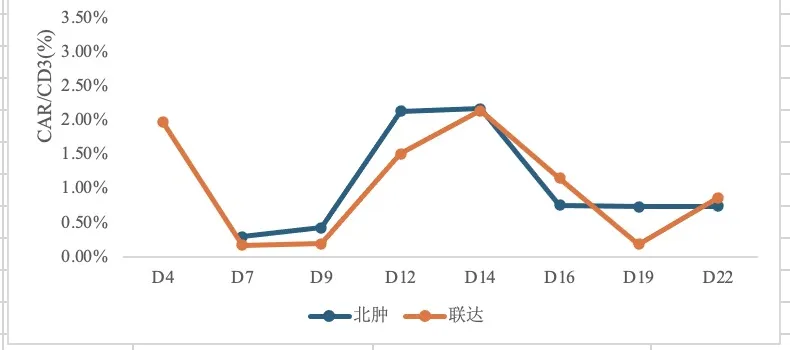
September 19, 2025 (Day 16): Monitoring revealed poor CAR-T cell expansion (see Figure 1 above). Simultaneously, serum lactate dehydrogenase (LDH) level rose to 375 U/L. The patient was withdrawn from the CAR-T clinical trial on the same day, and a PD-1 inhibitor was administered to attempt promoting CAR-T proliferation — without success.
Step 2: CD20/CD3 Bispecific Antibody Rescue (Glofitamab)
With disease continuing to worsen and pancytopenia precluding conventional chemotherapy, the MDT team re-evaluated and — after thorough discussion of benefits and risks with the patient and family — transitioned to glofitamab (a CD20/CD3 bispecific antibody):
| Date | Treatment Step |
|---|---|
| October 30, 2025 | Obinutuzumab pretreatment (to mitigate early cytokine release) |
| November 6, 2025 | Glofitamab step-up dose: 2.5 mg |
| November 13, 2025 | Glofitamab step-up dose: 10 mg |
| November 20, 2025 | Glofitamab therapeutic dose: 30 mg; weekly thereafter, planned total 12 cycles |
The patient experienced only transient low-grade fever on day 2 after each administration, with no other significant adverse events. Tolerance was excellent.
IV. Outcome: Comprehensive Response Assessment
January 4, 2026 — Response Evaluation:
Key Response Metrics
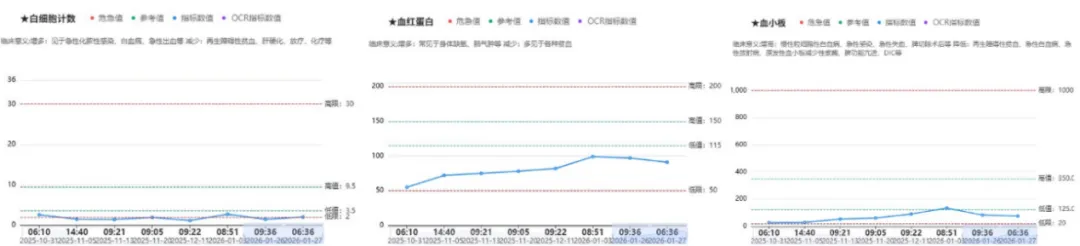
- Blood counts restored toward normal: White blood cells, hemoglobin, and platelet counts all recovered significantly compared to baseline (see Figure 3 below).
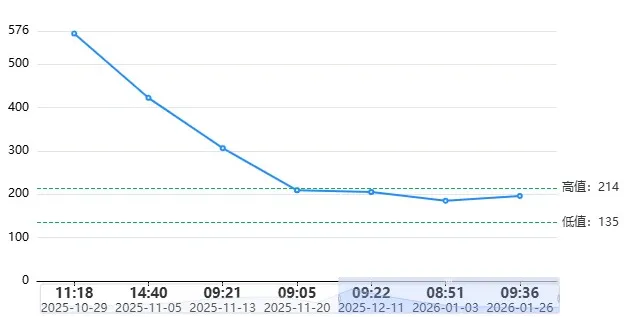
- Serum LDH normalized: LDH levels returned to normal range.
- Lymphadenopathy markedly reduced: Intra-abdominal, internal iliac, and inguinal lymph nodes all demonstrated significant size reduction on ultrasound examination (see Figure 4 below).
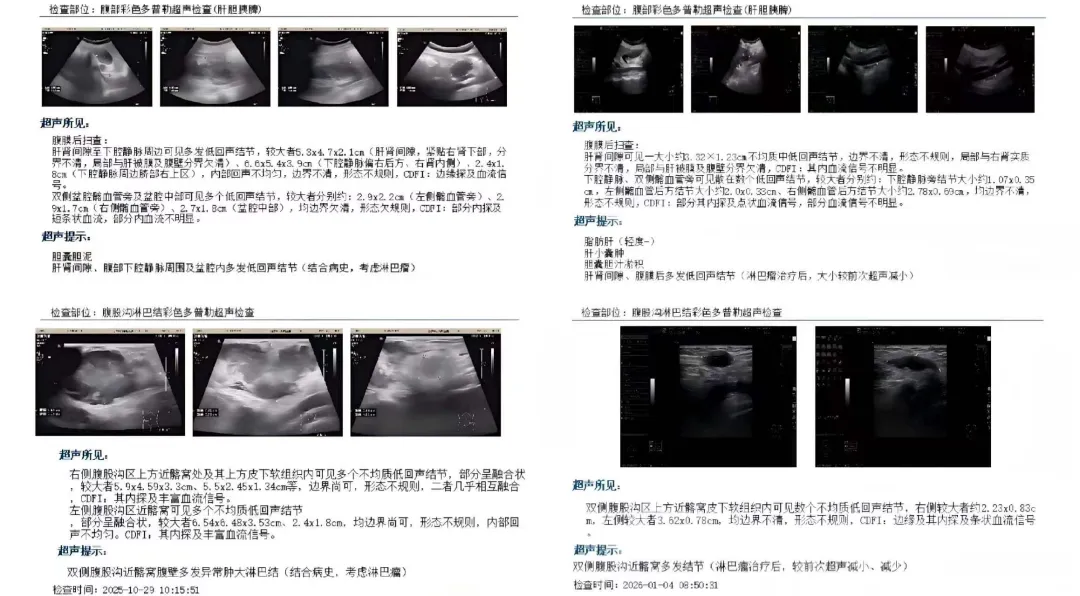
Current Status
As of the latest follow-up, the patient remains in good general condition with sustained disease remission. Notably, throughout the entire course of glofitamab treatment, there has been no Grade ≥ 2 CRS, no ICANS, no severe hematologic toxicity, and no serious infections.
V. Key Clinical Insights
Insight 1: Full-Spectrum CAR-T Capability Validation
This case validates that Beijing Arion Cancer Hospital has established a complete CAR-T cell therapy technology platform — encompassing peripheral blood lymphocyte collection, ex vivo CAR-T manufacturing under GMP conditions, quality control, clinical implementation, and complication management. The institution is fully capable of independently conducting novel CAR-T cell treatments.
Insight 2: Mechanisms of CAR-T Failure in Multi-Line Pre-Treated Patients
This patient failed two different CAR-T products targeting different antigens (CD20 then CD19). The likely contributing factors include: T-cell functional exhaustion from prolonged prior therapy, diminished T-cell activation capacity, and an immunosuppressive tumor microenvironment inhibiting CAR-T cell activity. Further basic and clinical research is needed to clarify these mechanisms and optimize future strategies.
Insight 3: Bispecific Antibody as a Post-CAR-T Salvage Strategy
Glofitamab (CD20/CD3 bispecific antibody) achieved disease control in this patient despite dual CAR-T failure, with minimal toxicity and excellent tolerability. Clinical trials have shown that bispecific antibodies achieve approximately 22% complete response rate even in populations where 30–40% have prior CAR-T exposure — whereas the CR rate for traditional chemotherapy after CAR-T failure approaches zero. This establishes glofitamab as an important salvage option for post-CAR-T relapsed/refractory DLBCL and provides a new direction for T-cell immunotherapy sequencing strategies.
Insight 4: MDT-Driven Adaptive Decision-Making
For relapsed/refractory DLBCL patients, even after multiple treatment failures, it remains essential to combine patient preferences, physical status, and available evidence to actively explore personalized treatment options through the MDT framework. Future research should focus on optimal sequencing of T-cell immunotherapies (CAR-T combined with or sequentially followed by bispecific antibodies) to improve long-term survival outcomes.
Expert Commentary
Prof. Zhang Wei
Department of Hematology, Peking Union Medical College Hospital (PUMCH), Beijing
DLBCL is the most common subtype of non-Hodgkin lymphoma. In the post-rituximab era, immunochemotherapy can cure 50–60% of patients. However, for those with refractory or relapsed DLBCL, the cure rate with traditional immunochemotherapy drops to only 20–25%. Both patient factors and tumor factors — particularly the latter, encompassing the tumor itself and its microenvironment and immune milieu — determine resistance to conventional treatment.
This patient exhibited primary drug resistance. Her tumor genomic profile included TP53 mutation, which has long been recognized as an adverse prognostic factor that standard chemotherapy struggles to overcome. She subsequently underwent salvage chemotherapy plus autologous stem cell transplantation, CD20 CAR-T therapy, and multiple small-molecule targeted drugs — effectively reaching a state of immune exhaustion. For a primary-resistant patient who has already passed through four lines of treatment, the expected cure rate with any additional chemotherapy is below 10%. At this juncture, switching to a different CAR-T target or transitioning to bispecific antibody therapy represents the optimal strategic choice.
Cellular therapy demands rigorous patient selection, safe and effective bridging treatment, and expert management of post-infusion complications including CRS, ICANS, and bone marrow suppression — all requiring close multidisciplinary collaboration. This case exemplifies precisely such collaboration among the Lymphoma Center, Radiation Oncology, Pathology, Radiology, Cell Therapy Center, Neurology, and Nursing teams: bridging radiotherapy promoted tumor antigen release and reduced tumor burden, enabling smooth preparation and infusion of the novel CD19/PD1/CD28 CAR-T product. However, owing to immune exhaustion from extensive prior therapy, CAR-T expansion proved inadequate.
Bispecific antibodies are likewise a form of T-cell immunotherapy. In pivotal clinical trials enrolling populations where 30–40% had prior CAR-T failure, bispecific antibodies still achieved a 22% CR rate — whereas the CR rate for traditional chemotherapy after CAR-T failure is essentially zero. At the critical moment when this patient's disease was continuing to progress and life hung in the balance, the Arion Lymphoma Center team immediately selected sequential bispecific antibody therapy. These two forms of T-cell immunotherapy, deployed in sequence, jointly mobilized the patient's own immune cells — ultimately achieving rapid tumor shrinkage approaching complete remission, without any Grade ≥ 2 CRS or ICANS, without severe hematologic toxicity or infection. This fully demonstrates the comprehensive capability of the Arion Lymphoma team in managing complex and difficult cases.
In recent years, cellular therapies have provided powerful new weapons in the field of immunotherapy for lymphoma — and potentially for solid tumors in the future. The proactive deployment of T-cell immunotherapy will enable DLBCL cure rates to surpass current benchmarks, fundamentally transforming the historical treatment paradigm of immunochemotherapy. However, this transformation equally emphasizes the need for multidisciplinary collaboration to achieve precise tumor classification, comprehensive individual patient assessment, and full-lifecycle management of T-cell immunotherapy — heralding a new era in DLBCL treatment.
Seeking Advanced Cancer Care in China?
Beijing Arion Cancer Hospital provides cutting-edge cell therapy and immunotherapy services, including CAR-T clinical trials and bispecific antibody treatments, for complex and refractory lymphomas. Our international patient team supports your entire journey — from remote consultation to treatment, visa, travel, and accommodation arrangements.
Request a Consultation International Patient Guide