
This article is a de-identified educational case review. It describes the clinical course of one patient managed at Beijing Arion Cancer Hospital and reflects the team's approach to multidisciplinary decision-making across multiple lines of therapy. It is not medical advice, nor does it guarantee outcomes for other patients. Treatment decisions must be individualized by qualified physicians.
Case Introduction
This issue discusses a 68-year-old woman with stage IVB, IPI 5 high-risk CD5-positive germinal-centre B-cell (GCB) diffuse large B-cell lymphoma (DLBCL) at initial diagnosis. She had already received second-line systemic therapy at another hospital, yet the disease continued to progress, with a high whole-body tumour burden and extensive fused multi-organ nodal involvement, leaving conventional treatment options very limited. After a comprehensive MDT assessment of the pathological features, prior treatment response, tumour burden and treatment tolerance, the patient enrolled in the LM101 autologous CD19 CAR-T cell therapy clinical trial. One month after CAR-T infusion the main abdominal lesions achieved complete metabolic response and the chest-wall lesion showed a marked decline in metabolism, with an overall response assessment of partial response (PR). This case fully demonstrates the core value of MDT team collaboration in the screening, delivery and early efficacy assessment of CAR-T therapy, and interprets the clinical advantages and safety management of cellular immunotherapy in this refractory population in light of the latest domestic expert consensus.
I. Case Overview
1. Baseline
The patient, a 68-year-old woman, presented in January 2025 with persistent dull upper abdominal pain and multiple enlarged superficial lymph nodes. Lymph node biopsy confirmed CD5-positive DLBCL, clinical stage IVB. She achieved complete remission (CR) after first-line standard immunochemotherapy, then developed extranodal relapse during maintenance therapy. Second-line chemotherapy combined with a CD20/CD3 bispecific antibody was given, but the disease still progressed after 3 cycles, with abdominal pain, poor oral intake and declining nutritional status. She was therefore referred to Beijing Arion Cancer Hospital for further treatment.
2. Core challenges
2.1 The high-risk dilemma of the disease biology. CD5 positivity, the GCB subtype with MYC/BCL2 double expression, Ki-67 as high as 90%, together with advanced age, stage IVB and multiple extranodal involvement, and rapid progression after multi-line chemotherapy — all indicate an aggressive disease with a high risk of drug resistance. Prior salvage therapy and conventional antibody-drug conjugates (ADC) or single-agent bispecific antibodies showed limited efficacy, and the benefit of autologous haematopoietic stem cell transplant (auto-HSCT) was also limited, so subsequent treatment posed a major challenge.
2.2 The conflict between treatment tolerance and high tumour burden. The patient was elderly and had received multiple cycles of treatment, with reduced bone-marrow reserve and nutritional status; at the same time she had extensive fused lymph nodes and extranodal lesions. Intensive salvage therapy could further increase the risks of myelosuppression, infection and organ toxicity. How to control the disease while balancing treatment tolerance thus became the main challenge in this case.
II. MDT Model: Formulating a Personalized Treatment Plan
2.1 Core MDT departments
The MDT comprised the Lymphoma Center, Cell Therapy Center, Pathology, Imaging Center (Diagnostic Radiology, Ultrasound and Nuclear Medicine), Critical Care Medicine, Neurology and Clinical Pharmacy. Centred on pathology stratification, tumour burden, cell manufacturing, lymphodepletion toxicity control and full-process management of infusion-related adverse reactions, a treatment plan was formulated through multi-dimensional assessment.
2.2 Three candidate options: pros, cons and interdisciplinary debate
Option A: Third-line intensive immunochemotherapy (Pola-GemOx/BR).
Theoretical benefit: the ADC polatuzumab vedotin combined with chemotherapy has some response rate in relapsed DLBCL and may reduce part of the tumour burden in the short term.
Core risks and interdisciplinary concerns:
Lymphoma Center assessment: with high BCL2/MYC expression and CD5 positivity, the ORR of ADC combined with chemotherapy in this relapsed/refractory subtype is only 40%–55%, with a low rate of deep remission and limited duration of response. The patient had already received multiple lines of chemotherapy with a weak bone-marrow reserve; intensive chemotherapy readily induces severe neutropenia and raises the risk of infection, and the risk of infection-related death is significantly higher in elderly patients.
Nuclear Medicine feedback: the patient had an extremely large burden of fused abdominal lymph nodes, and there was a risk of extranodal organ invasion progressing during the waiting period.
Clinical Pharmacy addition: after prior oxaliplatin and gemcitabine chemotherapy the patient had experienced related adverse reactions; continuing chemotherapy would add cumulative neurological, hepatic and renal toxicity, leaving limited room for continued treatment.
MDT conclusion: not recommended for now — low benefit and excessively high safety risk; reserved only as a palliative fallback after CAR-T failure.
Option B: Auto-HSCT bridging therapy.
Theoretical benefit: high-dose myeloablative chemotherapy with stem-cell support can transiently clear circulating tumour cells.
Core risks and interdisciplinary concerns:
According to the 2026 CD5+ DLBCL consensus, in multiply relapsed CD5-positive patients the median progression-free survival after transplant is only 4.9 months, with no long-term survival benefit.
Critical Care assessment: given the patient's huge chest-wall and abdominal lesions, high-intensity bridging chemotherapy for debulking would be needed before transplant, which has a high tolerance threshold, and elderly patients may struggle to withstand the conditioning-related toxicity.
Cell Therapy Center note: after multiple prior chemotherapy cycles the success rate of stem-cell mobilization drops substantially, and adequate stem cells are difficult to obtain from apheresis, making transplant feasibility low.
MDT conclusion: considering the patient's physical condition and economic circumstances, this is not the preferred first-line option.
Option C: Enrolment in the LM101 autologous CD19 CAR-T cell therapy clinical trial (final consensus).
Evidence and benefit: guidelines clearly recommend prioritizing CAR-T clinical trials for relapsed/refractory CD5+ DLBCL, with a 5-year overall survival of up to 42.6%, and the potential to clear both nodal and extranodal lesions independent of chemotherapy-resistance pathways.
Pathology: CD5+ DLBCL is prone to immune escape; in this case the hospital's pathology department re-reviewed and confirmed sustained expression of the targets CD19 and CD20, meeting the immunophenotype criteria for enrolment in the CD19-targeted LM101 CAR-T trial.
Cell Therapy Center: the GMP facility can achieve immediate cell manufacturing, reducing cold-chain loss and safeguarding CAR-T cell viability; apheresis, lymphodepletion and infusion are standardized in sequence, reducing process-related risks. The FC lymphodepletion regimen is relatively mild in toxicity and significantly lower in intensity than transplant conditioning, and is tolerable for an elderly patient with ECOG 1. CAR-T cells can produce marked tumour metabolic suppression within 2–4 weeks of infusion, with rapid remission potential for this case's ultra-high-burden fused abdominal lymph nodes. Potential risks and supporting management plans had all been prepared, with monitoring initiated immediately after infusion.
Critical Care Medicine: after infusion, closely monitor blood counts, inflammatory cytokines and other indicators; establish pathways for cytokine release syndrome (CRS), immune effector cell-associated neurotoxicity syndrome (ICANS), neutropenia and impaired consciousness, and promptly initiate the emergency response pathway if grade 3 or higher adverse reactions occur.
III. The Key to Breaking Through: Standardized Full-Process CAR-T Implementation and Dynamic Toxicity Management
1. Analysis of the key technical points
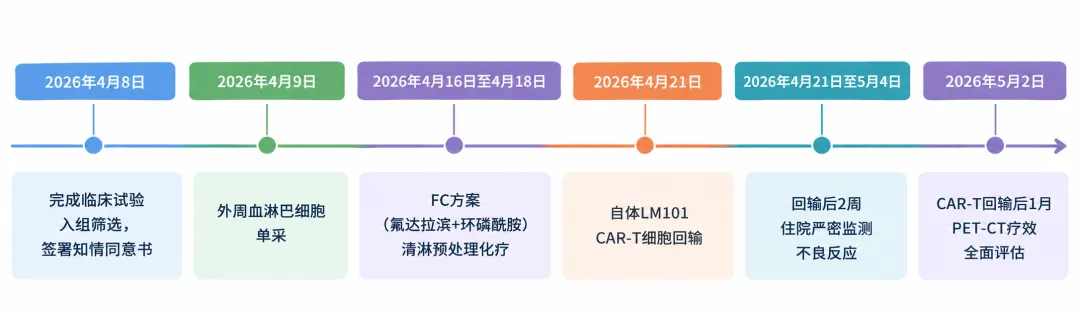
1.1 Peripheral blood lymphocyte collection. During collection the patient's blood was circulated extracorporeally and lymphocytes — mainly T cells — were separated by centrifugation, with the remaining blood components returned to the patient. ECG monitoring was maintained throughout, with divided calcium supplementation to prevent hypocalcaemia; the process went smoothly with no adverse reactions. After collection the specimen was immediately transported to the GMP cell facility under strict sterile, constant-temperature cold-chain conditions to avoid loss of cell viability.
1.2 Key points of lymphodepletion. The patient was elderly with other chronic diseases, so the FC regimen (fludarabine + cyclophosphamide) required adequate hydration to prevent haemorrhagic cystitis, together with concurrent liver-protective and gastric-protective drugs and dynamic monitoring of blood counts, creatinine and electrolytes.
Tolerance of conditioning: the patient felt only mild fatigue and slightly reduced appetite; the daily lymphocyte count fell progressively, successfully clearing the body's innate lymphocytes and creating an "empty" immune microenvironment for CAR-T cells to survive and further expand in vivo.
1.3 CAR-T cell infusion procedure. The CAR-T cell product released after passing quality control was rapidly infused intravenously through a filter-free infusion set, with ECG monitoring throughout. Thirty minutes before infusion a non-steroidal anti-inflammatory drug was given prophylactically to reduce the risk of infusion allergy. The patient's vital signs remained stable throughout, with no infusion-related adverse reactions, and she was closely observed in the laminar-flow ward.
1.4 Tiered toxicity management within two weeks after infusion. Following the CAR-T adverse-reaction grading management standard, the patient's basic vital signs (temperature, blood pressure, oxygen saturation and level of consciousness), fluid balance and neurological status were monitored daily, with attention to blood counts, CRP, procalcitonin and cytokines. From day 0 to day 14 after infusion the patient felt only mild fatigue and transient lumbar-abdominal soreness, with no fever, hypotension or hypoxaemia, and no neurological toxicity such as headache, tremor, somnolence, aphasia or seizures; inflammatory cytokines remained within the normal range throughout, with no CRS or ICANS of any grade — achieving a low-toxicity treatment outcome. On days 4–10 after infusion the patient developed grade IV neutropenia (ANC < 0.5 × 10⁹/L), without severe decline in platelets or haemoglobin. Infection indicators (procalcitonin, C-reactive protein and blood cultures) were negative throughout, with no fever or infection of any system. The MDT discussion considered the myelosuppression a reaction after lymphodepletion chemotherapy, and with prophylactic anti-infective therapy, strengthened environmental protection and oral/perineal care, the patient's own granulocytes gradually recovered steadily without infectious complications. Liver, kidney, myocardial enzymes and electrolytes remained stable throughout, blood pressure was well controlled, and there was no organ damage from the combined chemotherapy and cell therapy. The patient was discharged smoothly two weeks after infusion.
2. One-month post-infusion PET-CT tiered efficacy assessment and short-term status
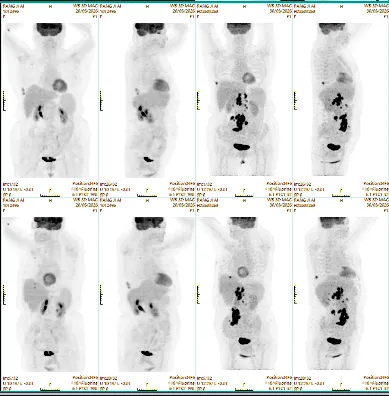
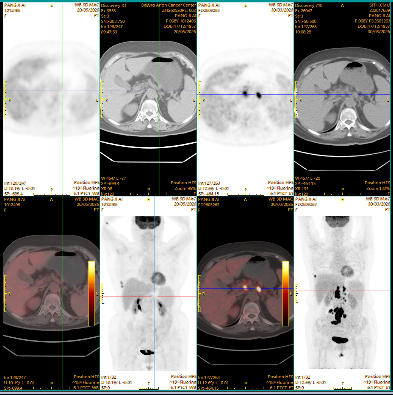
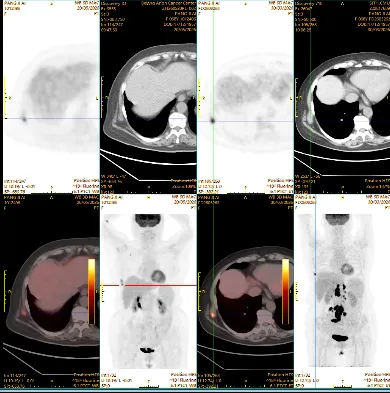
Efficacy assessment: complete metabolic response of the abdominal lesions, marked response of the chest-wall lesion. A repeat PET-CT one month after CAR-T infusion showed significant remission of the patient's abdominal lesions. Before treatment a large number of fused enlarged lymph nodes were visible in the hepato-gastric space, the mesentery and the retroperitoneum, with SUVmax up to 29.7; on the repeat scan no significant enlarged lymph nodes or abnormal FDG uptake were seen in these regions, and the abdominal lesions achieved complete metabolic response (CMR). For high-burden lesions that had still progressed after prior multi-line therapy, this rapid metabolic remission indicates that the patient had a good early response to CAR-T.
The right chest-wall extranodal lesion also showed a clear metabolic response. Before treatment the chest-wall soft-tissue mass measured about 3.3 cm at its largest diameter with SUVmax 13.2; after treatment, although the extent of the lesion had slightly increased, FDG uptake declined markedly, with SUVmax falling to 6.0, indicating a significant reduction in tumour metabolic activity. Assessed by the Lugano criteria this was a PR. Compared with the abdominal lymph nodes, the chest-wall extranodal lesion still showed some residual, suggesting possible heterogeneous responses among lesions at different sites, which still requires dynamic follow-up.
No definite disease progression was seen in the right axilla or the pelvic adnexal region. A tiny metabolically active nodule was seen in the right axilla, about 0.5 cm in short diameter with SUVmax 3.1, with no progressive enlargement or increased metabolism observed so far; mildly increased soft-tissue metabolism in the bilateral adnexal regions showed no clear progression from baseline, and no new pelvic lesions appeared. Considering the changes in the whole-body lesions, the patient's overall response one month after CAR-T infusion was assessed as PR.
Beyond the imaging benefit, the patient's clinical status also improved. After infusion she had only mild right chest-wall tenderness, and no B symptoms such as fever, night sweats or fatigue; diet and bowel/bladder function returned to normal; body weight increased by about 3 kg within one month; and the ECOG score remained 1, allowing her to carry out daily activities independently. The prior CAR-T-related myelosuppression had recovered, with blood counts of all three lineages, liver and kidney function and inflammatory markers gradually returning to baseline levels, and no persistent treatment-related organ damage.
IV. Multi-Level Clinical Insights from This Case
1. Diagnostic-thinking insights for the CD5+ DLBCL subtype. According to the Chinese expert consensus, patients with a high IPI at initial diagnosis and multiple relapses derive limited benefit from conventional chemotherapy. This patient relapsed extranodally within a short period after first-line therapy and progressed on second-line salvage therapy, indicating strong treatment resistance. When encountering similar high-risk patients in practice, CAR-T and other cellular immunotherapies should be evaluated early, to avoid repeated ineffective treatment causing further damage to bone-marrow and organ reserve. After CAR-T in this case there was a differential response — complete metabolic response of the deep abdominal lymph nodes and PR of the chest-wall extranodal lesion — suggesting that lesions at different anatomical sites may have different response characteristics. For residual lesions after CAR-T, imaging should be dynamically assessed and local or combination strategies formulated according to subsequent disease changes. The patient was 68 years old and had received multiple prior treatment cycles, yet during CAR-T she developed no CRS or ICANS, only transient grade IV neutropenia that recovered — suggesting that for elderly patients with acceptable performance status and organ function, age should not be the sole basis for excluding CAR-T.
2. MDT collaboration experience in delivering CAR-T therapy. For patients with refractory or relapsed CD5+ DLBCL, diagnosis and molecular typing should be refined through pathology review and necessary molecular testing, while CNS involvement and extranodal disease should be assessed and CAR-T target expression confirmed, to provide a basis for subsequent individualized treatment decisions. Before treatment, whole-body tumour burden should be assessed with PET-CT, and target lesions at different sites should be regionally assessed with metabolic-parameter records, which also helps objectively judge the response of different lesions after treatment and promptly identify local residual or progression risk. The MDT should pre-formulate monitoring and management plans for CRS, ICANS and severe haematological toxicity, coordinated by the Cell Therapy Center, Critical Care Medicine and related departments, to achieve early identification and timely intervention of adverse reactions during treatment.
3. Optimization directions for antitumor treatment techniques. For high-tumour-burden DLBCL patients, future exploration could include low-intensity targeted or ADC bridging therapy before apheresis, to reduce tumour burden before CAR-T infusion and improve the systemic response. For extranodal residual lesions such as those in the chest wall, skin and soft tissue, sequential local radiotherapy after CAR-T could be explored to further control residual lesions and delay disease progression. Combining the relevant consensus and current research, the combined or sequential use of a BTK inhibitor with CAR-T could be further explored, aiming to reduce the risk of relapse by blocking B-cell receptor signalling. In this case the tumour cells expressed both CD19 and CD20, so CD19/CD20 dual-target CAR-T strategies could also be explored in future to reduce the risk of disease escape caused by loss of a single target.
4. Unresolved clinical questions and future outlook. One question in this case still merits further discussion — why did the abdominal lymph nodes achieve complete metabolic response in this patient while the chest-wall lesion still showed partial residual? One possibility is that some lesions show a delayed response after CAR-T, and the degree of remission may relate to in-vivo CAR-T expansion, tumour-microenvironment remodelling and lesion infiltration. In addition, whether CD5 participates in tumour-microenvironment immunosuppression and affects CAR-T cell infiltration and killing in soft-tissue lesions is also worth further study. Moreover, as cellular therapies such as universal CAR-T, CAR-NK and bispecific T-cell engagers continue to develop, the treatment model for relapsed/refractory DLBCL may further move toward full-course management combining cellular therapy with targeted and local therapy. Exploration of targeted therapy against key molecules such as CD5 may also provide new treatment strategies for high-risk CD5+ DLBCL.
Expert Commentary
Prof. Zhang Wei
Chief Physician, Professor, Master's Supervisor, Department of Haematology, Peking Union Medical College Hospital (PUMCH).
CD5+ DLBCL often occurs in elderly patients, with a higher proportion of women and a poor prognosis. In recent years lymphoma experts in China and abroad have studied its biological characteristics, finding that it is predominantly of the MCD subtype, with high rates of bone-marrow involvement and CNS relapse; intensive first-line therapy is recommended, and if combined with X/Y the best choice is a BTK inhibitor. This patient was an elderly woman with a large tumour burden, lymph-node plus extranodal organ involvement, progression within one year of first-line therapy (primary resistance), and further progression after second-line therapy. When she came to the Arion Lymphoma Center, her disease showed extensive systemic involvement with a high-risk IPI, and her own condition showed significantly reduced physical fitness after repeated chemotherapy and poor nutritional status. For patients with primary resistance undergoing third-line salvage, the cure rate of conventional immunochemotherapy is less than 15%. The Arion MDT team's philosophy and practice of running through the whole patient journey once again highlighted its advantages in this patient's management. The optimal plan collectively formulated by the imaging, nutrition and radiotherapy departments ultimately determined to proceed directly to CAR-T therapy, maximally overcoming resistance and improving the cure rate. LM101 autologous CAR-T cells enable decentralized manufacturing — no cryopreservation is needed, lymphocytes are freshly collected for preparation and rapidly re-infused without bridging. This can markedly increase the stem-cell-like component of the infused lymphocytes, reduce the exhausted fraction and improve expansion and killing function. This patient went through CAR-T smoothly at the Lymphoma Center, without obvious CRS, ICANS, myelosuppression or infection complications, achieving a significant reduction in tumour burden one month after infusion, with the continued support of the MDT team. During follow-up, since the patient did not achieve CR, maintenance therapy with a bispecific antibody or a novel BTK inhibitor could be pursued to eliminate MRD and achieve durable CR. It is hoped that decentralized rapid CAR-T manufacturing technology will be translated into commercial application as soon as possible, greatly reducing manufacturing costs, lowering the cost of CAR-T therapy and increasing the accessibility of cellular therapy for Chinese lymphoma patients.
Medical Disclaimer
This article is provided for general medical education and public health information only. It does not constitute medical advice, diagnosis, or treatment recommendations. Clinical outcomes depend on individual circumstances, and treatment decisions should always be made with a qualified physician.